Melinda Bargreen is gone. No, not like that, but enjoying retirement at the hands of Seattle Times staff reductions. Even though we've had our bones to pick with her on several occasions, it is truly sad that the Times sacked one of Seattle’s only music critics after almost 31 years of splendid service.
Way to go, fuckheads! Enjoy the cloudy weather!
Painting by Jana Bartouskova.
5/13/08
In Memoriam: A Seattle Supersonic
5/9/08
Why the Detritus?
I enjoy Anne Midgette’s articles. She’s thoughtful. She’s articulate. She’s eloquent even—a nice fit with the venerable Washington Post. But today...
Somebody forgot to tell the violinist Hilary Hahn that Schoenberg is ugly.
This is, by far, the most disappointing thing I’ve ever read from a respectable, industrious, (how about) progressive critic. More importantly—because after all that was only my opinion—she crossed the boundary between impartiality and partiality. “Schoenberg is ugly” is declarative in the worst, most biased sense. This is something we expect from others, but not our Anne!
And now for something completely different:
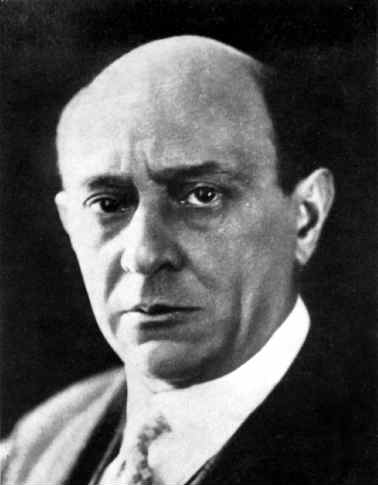
The music of Arnold Schoenberg, of course, isn't ugly at all;
How can this be? She just said, “Schoenberg IS ugly.” I don’t get it. What kind of twisted negative rhetorical device is this?
(loud, pissed-off sigh)
Sorry. Well, I’m not sorry. No one gets to have it both ways. Either Schoenberg is or he isn’t. So, Anne, choose the form of the destructor.
in fact, he's one of the last of the romantics.
Let me understand this correctly. Schoenberg isn’t ugly, BECAUSE he’s a romantic composer; if he were a modernist, he’d be ugly. Is that really the direction you want to take this, Anne?
...
Fine.
Her new recording of the Schoenberg Violin Concerto on Deutsche Grammophon, released last month, shows no traces of the spiky, unpleasant angularity that represents Schoenberg in the popular consciousness.
You, Anne, and all critics are the everyday opinion-molders of the popular consciousness. Thus, Schoenberg’s reputation is your doing. You are the one(s) responsible for his unpleasantness. They are your descriptors.
I mean, listen, really listen, to what this says:
Both musicians [Esa-Pekka Salonen and Hahn] are smart enough not to get tied in knots by Schoenberg's score, and to see through it to the composer's inner romantic.
It says that the conductor and violinist smartly mined romanticism out of Schoenberg’s otherwise ugly, difficult, spiky, unpleasantly angular, dense, clotted, ferocious piece (all adjectives found previously within the article).
Do you now see how Schoenberg and modernism get their reputations? Reviews like this, which say, “Despite Schoenberg, the music is beautiful, because of the performers.” What kind of dismissive, backhanded logic forgets that the composer put those sounds, those romantic, angular notes, onto paper and not the performers? Apparently articles like these:
To sweeten the pill for non-initiates, Hahn pairs Schoenberg with Sibelius [...]
I am truly disgusted and disappointed, today. But, then again, this is why we are here: to defend good writing and trash the bad.
(By the way, I didn’t say “fuck” once, but I wanted to. Congrats Empiricus! Thank you.)
-
5/8/08
Specificity Required
Let’s try a bit of deductive reasoning to identify this enigma, this mysterious “Allegro,” to which Sabine Kortels of the Denver Posts refers.
Closing the delightful, well-paced program with flair and finesse, Spivakov led the [Moscow Virtuosi Chamber Orchestra] in a light, breezy reading of Mozart's brief "Allegro."
Okay, the facts. It's a piece by Mozart. Allegro means fast. It was written for orchestra, presumably without a soloist. It is brief. It is, loosely, “light” and “breezy.”
All we have to do now is find a list of Mozart’s works and start to rule out pieces that don’t fit the facts.
List
(scanning....scanning...)
I wonder if I can include the allegro movements from his symphonies? How ‘bout another list?
List 2
(scanning...scanning...)
Dammit! I give up. Sabine, please just give us the Köchel Number, or some other identifier.
-
We Are the Dohnanyi, You Will Be Assimilated
I don’t know if he meant it that way, but Mark Swed made a curious reference concerning London Philharmonic conductor Christoph von Dohnányi and his old-school ways.
One can fight Dohnányi's stern approach. I tried. But the players clearly revere this conductor. And in the end, when the brass stood and played too loud for the hall, when the clotted strings and winds became a sonic army, when Dohnányi's sense of mission produced a startling climax, resistance seemed futile [it. mine].
If anyone was to deserve this reference, musically speaking, I thought maybe Hanz Pfitzner would be the ideal candidate. Or even, Richter. Klemperer. Strauss. Furtwängler.
Sheesh. How jejune. Anyway, silly Germans.
-
5/7/08
Call for a Moratorium
Alas, it has long been tradition to make puns and jokes using musical terms and names. I love puns and jokes, sometimes even especially music-based hilarity. But some traditions have played themselves out. Like:
Q: Why couldn't Mozart find his teacher?
A: Because he was Haydn!
See! An alarmingly clever --and super-tired--play on words. Or this:
Q: Why did Mozart kill all of his chickens?
A: They kept saying "Bach! Bach! Bach!"
Great. That's just great.
It is, more than anything, the puns on the name "Bach" for which I am calling a moratorium.
Alas, I am too late. The normally-reliable John von Rhein of the Chicago Tribune offers this gem, in re: the upcoming Bach Week Festival.
Cue the choir. Sound the trumpets. Bang the drums.
Why, whatever for?
The Bachanalia is about to begin!
Can we please, please stop the madness?
RESEARCH UPDATE:
Very unfortunately, there is already a group of the same name.
Color me...unsurprised.
Metaphoric Boos
Today’s winner of the “Failed Food Metaphors” tag comes from Burkhardt Reiter of the Pittsburgh Post-Gazette with his review:
Quartet overcomes venue limitations for intimate concert
We certainly have seen some ham-fisted food metaphors in our day, but what follows just might take the cake.
If the New Hazlett Theater were a martini, it would be a very dry one.
Of course, what he’s saying is that the Theater’s acoustics were dry, meaning dull, boxy and/or non-reverberant. It also helps explain the title: it was a good show despite the hall’s dryness. Fine. No problem.
Unless you prefer your martinis dry.
But here’s where Burkhardt shakes it up, when he’s supposed to stir:
Despite the New Hazlett's acoustic drawbacks, the quartet projected a sense of intimacy in this space that a more reverberatory venue may have lacked.
A contradiction: the dryness of the theater is what made the quartet metaphorically taste sweeter! That is the opposite of a dry martini, sir. See Vermouth. FAIL.
-
Unfortunately, Burkhardt doesn’t stop cooking up metaphors there.
Served as an appetizer to the rest of the concert, the quartet presented three movements from "John's Book of Alleged Dances" by John Adams...
Then,
The meat of the first half was Terry Riley's "Mythic Birds Waltz" and Wayne Peterson's "Jazz Play."
What could possibly be the dessert? I’m dying for chocolate-covered strawberries.
Sadly and wisely, the dessert is only implied. But it’s still rather disturbing, because it's what I’d expect from modernist-hater Bernard Holland, not Burkhardt Reiter and his warm review of newer pieces. It’s...
...(drumroll)...
the only romantic piece on the concert. By. Beethoven! Yeah!
Boo and FAIL.
-
5/6/08
Zest and Zeal and Editors and Sentences
Zesty ROCO concert starts on slower note
As noted in this space before, columnists are not necessarily responsible for titling their efforts. Mr. Ward may not be culpable, here. However, if some editor wrote the title above they 1) read only the first paragraph when choosing the title, and/or 2) did not bother to edit the rest of the article. Because it needs editing, which I will now elucidate. Begin!
The River Oaks Chamber Orchestra needed a few movements to warm to guest conductor Joel Smirnoff. When it did, it took to music of Maurice Ravel, Joseph Haydn and Brad Sayles with relish and zeal.
I’d prefer “warm up to”, but I’ll accept “warm to” in the interest of brevity. However, I do not like relish. I do, though, like zeal in my martinis. “Give me a dry martini with zeal,” I’ll often say.
In the practice of today, ROCO named its final program of the season The Philosopher.
“In the practice of today”? What does that mean? Read that sentence again. I’ll wait. See? What? I…don’t know.
Taken from the nickname of Haydn's Symphony No. 22, it was a silly choice.
Um, okay?
Only one of the three works had anything substantial to do with philosophy: Sayles' Echoes of Invention after the popular public radio program of John Lienhard.
What? How has the connection between the work’s title (let alone the piece itself) been shown to have “anything substantial” to do with philosophy? Sayles’ piece is “after” a popular radio program? What? Named after? Inspired by? I really…
Smirnoff and others soon gave up trying to pack the music inside that title during their comments.
They…gave up…packing music…into the title…during comments? You…how does one pack music into a title? Perhaps the intended sentiment is something like “…they failed to show how the music conformed to the rubric “The Philospher” during their pre-concert talk”? But that’s the most sense I can make of this madness. Is it me? Am I dense? The…
The first performance, Saturday afternoon at
“A standard concert-giving”? Passive voice much? Is “a standard concert-giving” in “the practice of today”? Has anyone proofread this? Common usage is on the what now?
Only the excessive chattiness marked any departure.
Ugh. A common complaint. Critics hate it when artists take the time to try to explain the music to an audience. Especially because they’re trying to attract new audiences, often people who are less-than-familiar with the repertoire. My theory is that critics secretly hope classical music will just finally fucking die, so they don’t have to do their dreary jobs (attending concerts and subsequently writing about it) anymore. Perhaps they all secretly want to be laborers?
Much of the talk added little to the music.
See above.
It was particularly embarrassing to hear St. John Flynn, KUHF's new director of cultural programming and host of the arts program The Front Row, place Smirnoff as the new head of the Cincinnati Institute of Music when the correct city is
Okay. That is really, really embarrassing. I’ll give you that. That is, in fact, unconscionably stupid, and Herr Ward is totally on the money here. Here’s a hint, St. John Flynn (director of cultural programming, for fuck’s sake): If you’re addressing a bunch of people, know what the hell you’re talking about.
[Edit: This was not his fault; see comments section. However, I will not delete the paragraph in the interest of honesty--SA.]Smirnoff opened with Ravel's Le Tombeau de Couperin, which looked back at Baroque dance movements for inspiration.
Le Tombeau de Couperin looks at things now? Since when are musical works sentient? Perhaps it was Ravel who was…
The first two movements went by as if everyone were on cruise control, rolling down the musical highway with highly tuned technique but little roar from the emotional engine. But midway through the third movement, Menuet, a swell of volume and energy turned into a swell of commitment and alertness. For the rest of the program, Smirnoff and musicians really clicked.
I don’t like the construction here. “Emotional engine”? However, the sentiment expressed is a valid criticism couched in a bizarre, if apt, metaphor. Fine. But:
In Haydn's symphony, Smirnoff and the musicians gave listeners a vivid reminder of Haydn's penchant for the unexpected:
It wasn’t Haydn that reminded listeners that he did strange things...it was the performance?
a seeming wrong turn in harmonies there,
Seemingly? (Note: adverbs modify verbs.) Also, some other performance of the same piece would not have “reminded” listeners of the seemingly wrong harmonic turn?
or, in the first movement, an unusual music texture.
Ah, yes. This is the one that really got me. “Unusual music texture”? Music texture? The…I…whew. No explanation, no elucidation, no…anything. First, “music texture” is redundant, since the article is about music. That’s like calling a cow a “land cow.” Second, that is the most awkward turn of phrase…ever. And what in The Flying Spaghetti Monster’s name does it mean?
The horns opened with a question, as Smirnoff termed it, and English horns answered, while the lower strings gave a very good imitation of the walking bass from American jazz. That's not the usual opening heard in Classical-era symphonies.
You…you just intimated—no, asserted—that Haydn’s 22nd Symphony (I assume, because you’ve failed to mention which symphony was played) IMITATES AMERICAN JAZZ. Can I please have your time machine? Because you’ve lost all track of the linear flow of history. I like the piece where Bach imitates Charles Ives. It’s my favorite!
The orchestra played with zest
As noted, I love me some zest (and/or zeal)! Especially with gin. Mmmm.
and distinctive style. The second movement had a low gusty roar, in part because the strings played with lots of grit to
“to” = “in”?
their bowing. The fourth movement, the last, sped along with woodwinds churning out repeated notes with surprising clarity.
The fourth movement was the last in a Haydn symphony? Dang!
Sayles' work comprised a series of six segments using text by Lienhard. The subject was "ghosts." They often were unexpected things that reminded us of the past in ways that might discomfort us, like the mummy found in the
What? Who are “they”? Do you mean “there”? Also: What? Mummies?
A recording engineer at KUHF, Sayles surrounded the words with a comfortable, eclectic style that suggested here and there movie themes of John Williams, the repetition of Philip Glass, soaring movie scores in general, pseudo-tribal dances, and a few other styles. The music sounded comfortable but the compositional technique was sure and the emotional shape of the music instinctively first-class.
John Williams’ movie scores, Glass, and, oh, also, movie scores. And a few other, non-specified styles. Great freaking sentence, wordsmith. Also the “emotional shape” (whatever that means) totally has extra leg room, a drink before take-off, and no charge for headphones for the in-flight movie. Instinctively.
KUHF's Dean Dalton narrated. Unfortunately, his body microphone wasn't well sited and many of his words came across slightly distorted and, often, overwhelmed by the accompaniment.
Finally, a coherent thought. About microphones.
Back to the top, and title: How, if at all, does the bulk of the article elucidate how the concert “started on a slower note”? What? Not at all? Only the first paragraph? Oh. Fine. I'll just show myself out...
Somewhere in
Hot Stuff from 1944, Ewww!
I must say, at the onset, that ClassicsToday is a good resource for those looking to find assessments of new recordings that often get overlooked by newspapers. And most of the reviews do, in fact, take into account the review philosophy set down by Executive Editor David Hurwitz. Only, he doesn’t write those ones. Historically, he forgoes the review philosophy completely, opting to address the quality of the music, which tends to expose his blatant dislike, nay disdain, of new music (by “new,” I mean music written after 1900).
So, from now on, I’m going to treat David Hurwitz as if the review philosophy didn’t exist. I won’t go on and on about how he didn’t address the “sound quality” or the “performance.” Instead, I’ll focus on what he says about the music. I think it would be easier on both of us.
That said...
Steven Stucky's Son et Lumière is one of those modern, anonymous-sounding "texture" pieces,
...this is fucked up beyond all recognition. He admits that he lumps—maybe categorizes if I were nice—music into modern/not modern, anonymous/authored and “texture”/ “_____” subsections worth easily dismissing. How condescending is that “those!” It’s like, “We need to build a gigantic wall to keep those Mexicans out!” “Texture” in quotations? Give me a break, David.
I would like to propose a new word to describe the irrational hatred of unfamiliar music: xenophonephobia.
Take that Bernard Hollands of the world!
...but it's no less rewarding for that as Stucky writes for the orchestra with great flair and confidence and the piece delivers exactly what the title promises: interesting sounds featuring an enjoyable interplay of light and shade.
Well, the title...only sort of. Wiki magic! But,
David actually...gulp...liked the piece? That might be a bit strong. I think that he was pleasantly indifferent to it.
*Have you ever gone to new music concert, mingled with the composers afterward and said something like, “Your piece was...um...interesting...and um...well-written,” but you didn’t really care for it and you were just being nice? No. Screw you! That’s happened to me.
Either way, Hurwitz sort of apologizes for his outright dismissal of one of “those” pieces, because it was interesting. Could he be turning a modernist corner?
Gabriel Ian Gould (no relation to Morton) is a young (b. 1974) composer whose Watercolors for English horn and orchestra is a sort of Swan of Tuonela for the New Millennium. If my preferences remain firmly with the old swan, this is still an attractive 12 minutes of pastels, the perfect contrast to Stucky's "in-your-face" opening.
“Attractive?” Wow. Maybe Hurwitz finally jumped on the 20th-century bandwagon.
But now comes the really hot stuff.
What’s that? Hot stuff? (puts on swimming goggles)
John Harbison's Cello Concerto (1993) strikes me as one of his most successful instrumental works, largely on account of very colorful orchestration that features an "East meets West" assortment of gongs and tuned percussion. The result avoids the timbral dullness that afflicts many of Harbison's other works, as does the inventive solo part that cellist David Finckel (of Emerson String Quartet fame) plays with admirable relish. You can enjoy this repetition-friendly work at first hearing and return to it with increasing pleasure as your familiarity with its captivating sound world deepens.
Amazing what can happen when you don’t outright dismiss things.
The main event, Morton Gould's Symphony No. 2 "On Marching Tunes", will come as a shock to those who think that the subtitle, the composer's reputation as a musical populist, and the date of composition (1944) mean that we're going to be treated to some sort of nationalistic pot-boiler. Indeed, the opening Variations and zesty third-movement Quickstep offer plenty of evidence to support that notion. They are brilliant and tremendous fun. But the second movement, Bivouac, really is a tenderly nostalgic berceuse, and the long, slow finale, Memorial, carries the music into regions inhabited by the finale of Shostakovich's Eighth Symphony, which it strongly resembles in its grief-stricken emotional ambiance and quietly ambivalent "major-key" ending.
The only problem I have with this is that Hurwitz likes the oldest piece best; it’s his most favoritest. Though, I’m not surprised with his preference, being a xenophonephobiac and all.
Let’s play a quick game. Queue the soundtrack. And. Go!
Son et Lumière (1988)
Cello Concerto (1993)
Watercolors (1998)
Symphony 2 (1944)
That was fun, wasn’t it?
[...] I have no doubt that it deserves to be ranked among the finest of 20th century symphonies.
Because it resembles Shostakovich’s Eighth Symphony’s “grief-stricken emotional ambience?” Air-tight logic that I will not attempt to crack. Not in a million-billion years.
Even if you don't respond positively to the other pieces on the disc (and they all are a touch more "modern" than Albany's musical average), you will find owning Gould's masterpiece well worth the outlay.
That sucks. He fucked up an otherwise good, for David Hurwitz, review (don't forget that we omitted the review philosophy) with one little, stinking “modern” in quotation marks. I mean, he was doing well for a while, then, thhbbbt! He shoved new music to the side, once again.
It’s sad. Even if we don’t hold Hurwitz up to the same review standards, which he penned, as we do others at ClassicsToday, we’re still left with shoddy writing and a classic case of xenophonephobia.
-
5/3/08
Holy Shit.
Here, we wouldn’t dare say “music is the universal language of mankind,” without rightly extending Wordsworth's sentiments to include women.
But, then again, in some corners of the world we could, just not classical music.
Judging by the reactions of some Saudis to Mozart, I worry that by finally introducing "romantic climaxes," Beethoven might be revolutionary once again, but for vastly different reasons, i.e., if it’s not too boring.
Because we all know it is!
5/2/08
Music Espresso, How May I Help You?
There is something to be said for the consistency of analytical method in a review. There are exceptions (mostly poetic), of course, but if inconsistent, the review can easily expose its author’s biases, unfamiliarity with the work or even the low levels of caffeine in her or his system. None of which, I think we’ll all agree, makes for good, fair criticism.
In Sarah Bryan Miller’s case, one can see, via the progression of her stylistic consistency, how the St. Louis Symphony’s morning concert series may not be the best idea. That is, from a PR standpoint, if you want a good review, make sure there is plenty of espresso to wake up the critic; they often have late, late, finger-crampy nights.
Perhaps it was appropriate to open a Friday morning coffee concert with a piece by Igor Stravinsky jn [sp.] jittery, nervous mode; the Concerto in D sounds distinctly overcaffeinated in places.
Perhaps it was the sheer rudeness of being disturbed before Stage N3 was complete, but isn’t it Sarah’s job to be wide awake and alert?
Apparently, the coffee hadn’t worked its magic, yet.
The Concerto demands great technical ability, but doesn’t offer listeners much to cherish. From its skittish opening, it drifts into a limping dance and a melody that loses its way -- and back into anxiety.
I can just see the eye crusties and the unwillingness to listen. Maybe a few yawns and a cowlick or two.
However, by saying that the piece “doesn’t offer listeners much to cherish” is downright lazy. (Personally, I wasn't familiar with the Concerto in D, so I took a few minutes to become acquainted, at which time I found this lovely little YouTube video of the middle movement, and an article written by Greg Sandow who said this about it:
One of my great musical pleasures — in many ways a guilty one — is the slow movement of Stravinsky's Concerto in D, written in 1946 for string orchestra. Stravinsky, of course, was a Very Serious Composer, but in the 1930's and 40's he wrote some fluff, and this slow movement sounds, I swear, a bit like Mantovani, the man who once reigned as the king of easy listening.
Not exactly “limping” by my account, anyway.) It’s lazy because it doesn’t make its case very well. Why does “skittish” to “limping” to “anxiety” make for a bad piece of music? I don’t think there’s anything inherently non-cherishable about this description or progression of descriptors.
No doubt, the coffee hadn’t settled in.
The compactness of the first half was accentuated by having the conductor double as soloist in the morning’s second work. Leonidas Kavakos, an estimable violinist who made his Symphony conducting debut on Friday morning, led a small chamber ensemble in J.S. Bach’s Violin Concerto in D minor, BWV 1052.
As a violinist, Kavakos offered his usual spot-on accuracy, with great beauty in the lyric passages and technique to spare. As conductor, he had great interaction with the players in the front stands; some of the lower strings, however, didn’t stay with him as well.
And that’s all there was to say about the Bach. No “good piece.” No “bad Bach.” It just was.
I liken this to that moment of repose after waking up, having had the first sip of Sanka, sort of neither fully conscious nor asleep, but still kind of functional, spewing out inconsistent gibberish and clichés like “technique to spare.”
But don’t worry. Sarah was fully awake for the second half. I’m guessing another cup of Joe and a cigarette during intermission.
The second half was a reasonably solid, if not overwhelming, performance of Felix Mendelssohn’s Symphony No. 3 in A minor, op. 56, "Scottish."
HYOPERBOLE TIME! I’M WIDE AWAKE. JITTERY AND OVERCAFFIENATED IN PLACES! OVERWHELMING! AHHHH! BUZZZZZ! ROMANTIC SWEEP! ROMANTIC ARCHING! NARRATIVING NARRATIVES! WEEEEEEE! BLACK! NO SUGAR! SUN-DAPPLED WHIMSY!
The Mendelssohn, a full-blown Romantic work, offers an abundance of melody and evocative tonal painting to gladden the heart and ears of the most traditional of concertgoers.
A Note to the St. Louis Symphony Orchestra Program Director: Let’s make it the “Friday Lunch Time Tea & Cookie Concert Series.” Please.
-
5/1/08
Apt Alliteration's Artful Aid: It's Almost Summer
The quote goes, “Who often, but without success, have prayed for apt Alliteration’s artful aid.” (Charles Churchill)
Well, it surely isn’t the clever journalist and critic Joshua Kosman, with:
Tuesday was such a beautiful night for Beethoven, Lang Lang decided to play two.
Congrats! Sort of a sonata thing going on in there, with “Lang Lang” as the development. I especially liked the dental Ds and the plosives.
Whoa, it’s slow out there.
-
4/30/08
Prescient and Archaic! Yeah!
Today, having some fun searching the NY Times archives--we're getting to that point in the concert season where classical music reviews and articles begin to slow down a bit--I stumbled across one of the most prescient thoughts ever, written in 1988. Take a step back, and it could even be the most succinct and eloquent mission statement for our little project.
It is a fanciful thought, but perhaps our century is feeling the pressure to tidy its house, settle on its strongest languages and discard its detritus while it still has time.
Ironic, because it’s also a jab on Morton Feldman and Olivier Messiaen.
-
Obligatory Anti-Serialist Post of the Week
Oh, inherent bias, what would we do without you? Welcome to Miami, dear readers.
In their contrasts, Franz Schubert and Alban Berg make a complementary pair.
Fair enough, I suppose. Contrasts compliment. Is that really quirky? This is quirky. Pairing two composers from the same city that lived less than a century apart seems more like…contrast, or complimentary. You said that. In your first sentence.

Both composers were, in very different ways, intrinsically Viennese and each man died young -- Schubert, most tragically, at 31.
Is dying at 50 (from an infected abscess from a bee sting) really less tragic than dying at 31? I mean, I suppose, maybe. Both tragic, though.
Schubert's genius added harmonic complexity and metaphysical angst to Biedermeier-era complacency.
Interesting sentiment. Note, however the construction: Schubert = genius. Let’s see what happens next!
Berg's lyricism and emotional depth put a human face on the chilly serialism of the
Ah, the inevitable backhanded knock on serialism. Schubert = genius. Serialism = chilly. Berg = mediates chilliness with warm emotion and lyricism. Not genius, though. That's reserved for pre-1900 composers.
Michael Tilson Thomas's smart, quirky programming combined works of both men for a bracing weekend Viennese festival by the New World Symphony. Friday night's opening event at the Lincoln Theatre set the tone with Berg's Lyric Suite and Schubert's Mass in E flat.
Mr. Johnson’s review of the Schubert can be read via the link at the top (and it's perfectly cromulent). I am only concerned with the inherent bias about…
Berg remains the most passionate and directly communicative
Passionate! Communicative! Emotional! Lyrical! Fuck that chilly non-genius Schoenberg! He totally didn’t write Pierrot Lunaire (which, in all fairness, is pre-12-tone, but also passionate, lyrical, emotional, and communicative all the same).
of the 12-tone school's early triumvirate (Schoenberg and Webern, being the other two).
You don’t say. And, what’s with, the, comma?
His Lyric Suite was born of an impassioned but apparently unconsummated love for a married woman.
So they say! What else?
Though written in 1928, Berg's Lyric Suite breathes an atmosphere of findesíecle
Although this could be an internet publishing error, someone should proofread these things. Fin de siecle (while I appreciate the italics) is totally ThreeDifferentWords.
Though written in 1928, Berg's Lyric Suite breathes an atmosphere of findesíecle Viennese decadence, the world of Gustav Klimt and Thomas Mann.
Even though…what? Thomas Mann: 1875-1955. Won the Pulitzer in 1929, the year after this particular Berg piece was published. Completely contemporary. Klimt died in 1918, but is still roughly contemporaneous with Berg and Mann. For no real reason, here is a picture by Klimt that is fun to look at.

The romantic inspiration is clear with its Tristan quotation but Berg deftly creates a kind of wrong-note Mahler, fusing subdued tragedy and emotional intensity within serial strictures.
Wrong-note Mahler. Seriously? Crap. (deep breath)
Berg wrote wrong notes!? What a lyrical emotional passionate chilly fool. Those damn serialists! They had no fucking idea.
The sense of romantic yearning and dark foreboding was clearly palpable in Friday's performance under Tilson Thomas. The burnished strings brought out the angular music of the opening movement as much as the mystery and elliptical strangeness of the multi-divided strings in the central movement and the dark-hued somber valedictory of the final section.
To sum up: Berg’s Lyric Suite is lyrical, passionate, emotional, and communicative, which mediates the cold chill of his technique of writing wrong notes, but is still angular, foreboding, elliptical, and dark-hued.Whee!
4/29/08
Rare Artur Schnabel Sex Tape Discovered!

This is an absolute must see for any musician with a healthy libido! But not this.
Enjoy! And comment!
-
4/28/08
DR Off-Topic: We're Full of Meme-y Goodness!
Oh, dear.
We've been tagged with a viral musicbloggy internet meme. I tried to find out where it started, but after a few dozen links back, I gave up. Perhaps someone knows? I first saw it here.
I'm supposed to (#5) say that we were tagged by Scott Spiegelberg over at Musical Perceptions.
It goes like this:
1. Pick up the nearest book.
2. Open to page 123.
3. Find the fifth sentence.
4. Post the next three sentences.
5. Tag five people, and acknowledge who tagged you.
"Falling Man", by Don DeLillo (which I got for xmas and haven't read yet, so this was that much weirder).
They walked toward the towers now, amid the sweep and crisscross of masses of people. All right. But what if the digits don't always total ten?
That was awesome.
Fine. Good. Let's play. I tag:
Joshua Kosman, Erik Loomis at alterdestiny, Tom Strini, anzu, and Your Mileage May Vary.
(By the by, the actual nearest book was Mozart Piano Sonatas, but I didn't feel like typing in a bunch of note names.)
These are strange times, people.
PS: We seem to be on the tail end of this, so apologies to anyone we've re-tagged.
Wherein Ancient Rhetorical Devices Are Explained
I’ve been meaning to write about Vivien Schweitzer for a while, now. I can’t find anything about which to call her out, because, well, she’s good. So I’m taking this opportunity to point out an oft-neglected rhetorical device: Extreme Understatement. Anti-hyperbole. Perhaps there’s a fancy ancient-rhetoric name for it, I don’t know.
What? Look it up? Okay. [looks it up]
It’s called Litotes. Here’s a good example:
“Business carried on as usual during alterations on the map of
WWII = alterations on the map of
Here is another (good example and favorite rhetorician):
When David Robertson first conducted at the Metropolitan Opera in 1996, he had the distressing experience of leading a performance of Janacek’s “Makropulos Case” in which a tenor died onstage.
Holy crap! “Distressing”? More like fucking terrifying, if you ask me. Potentially traumatic, even.
Then, this:
Things went more smoothly on Saturday night, his first appearance at the house in a decade, leading Mozart’s “Entführung aus dem Serail” (“The Abduction From the Seraglio”).
More smoothly = nobody died onstage. Wow. Exemplary.
Keep it up, Ms. S.
Original article here.
Midgette's Wang: A Freaky 'Favorite'
It’s true that Yuja Wang made an appearance at the Baltimore Symphony Orchestra, but this isn’t about that. This is about something else. In fact, this is about this:
It was amusing, or bemusing, that the Baltimore Symphony Orchestra's most recent program (heard Friday night) was part of the orchestra's series called "Favorites," an attempt to label some greatest hits for the benefit of new concertgoers.
Concert programmer: “In my attempt to figure out how we can make more money, I’ve come up with several ideas. Let’s pander to the lowest common denominator. Let’s turn our concert hall into a dead museum. Let’s lease advertising space and rename ourselves the ‘Wal-Mart Symphony Orchestra.’ How’s that sound?”
Board members (in unison): “Huzzah!”
What a joke, right?
The piece that earned it this designation was Berlioz's "Symphonie Fantastique" -- a greatest hit, true enough.
I know. It’s like the most famousest piece ever, ever.
But it is also a comment on what the orchestral repertory has become that a piece this weird and warty,
Well... back in 1830. Yes. It was weird and warty.
so category-defying,
In 1830. Today, we call it a tone-poem or a programmatic symphony.
revolutionary
Sure, in 1830.
and altogether uncomfortable
But it’s the most famousest piece ever, ever. How can it be uncomfortable if it’s so familiar?
But it is also a comment on what the orchestral repertory has become that a piece this weird and warty, so category-defying, revolutionary and altogether uncomfortable [...], should be presented under a rubric that seems to connote tame respectability.
[It. mine] The first version of the piece is 178 years-old! It is the most famousest piece. Ever. Ever! How can you say that Berlioz is not representative of the canon after nearly two centuries of fame-having-ness? How can you think that it’s weird, even today?
...
Hello? Anne? Are you still there?
The other two works on the program certainly fit nobody's definition of "favorites": Prokofiev's First Piano Concerto, a piece that's young, brash and short, and...
Whoa. Stop right there.
Let me get this right. So you’re saying that the Prokofiev is young?
When was this review written again? (checks date) April 28, 2008. I was right. It was written today.
And the Prokofiev Concerto was written when? 1910? And it’s young? Huh...?
-
Oh. I get it. Some people or critics have selective amnesia. They block out anything that’s younger than Elliott Carter. There’s a black void where musical modernism used to be. So, in that light, the Symphonie Fantastique is only roughly 80 years-old and the Prokofiev is a spring chickadee.
-
4/27/08
Curiouser and Curiouser
From the
Houston Grand Opera’s ‘Billy Budd’ sails straight
Um. What? Because, you see, Benjamin Britten…not to be indelicate, but…
I understand that critics don’t always get to title their articles. So perhaps the editor, not the critic is culpable here. But I can’t decide if this is
-funny (intentional) or
-rude (some conservative
-ironic (completely oblivious about Britten) or
-in poor taste (some combination of the above). Because:
…there's more than a hint of homoeroticism…
Yeah, yeah there is. And Britten was very famously gay. So: What’s the deal with:
Houston Grand Opera’s ‘Billy Budd’ sails straight
???
Composer of the Day!

Today’s Composer of the Day is Peter Eötvös.
(b. 1944)
Born in Transylvania, Romania, Peter composed for Hungarian films and played in the Stockhausen Ensemble, before succeeding Pierre Boulez as director of the Ensemble InterContemporain from 1978-1991. He also figured prominently at IRCAM.
His music tends toward the dramatic; he has written a number of operas, stage scenes, and orchestral works that include theatrical action. His piece Triangel is a concerto for percussionist who roams about the stage focusing on a particular instrument or sets of instruments. Also, the piece is notated without fixed pitches, but relative pitches. Only the rhythms are determined.
Peter is an accomplished, well-decorated conductor and teacher, as well. His music has won numerous awards and stuff, too.
A critic to remain nameless (Bernard Holland) has said this of his music:
You can enjoy Mr. Eotvos’s music without trusting it. His three-movement “Chinese Opera,” brightly done on Saturday night by the St. Paul players, is a construction of many moving parts and brilliant sound effects. Yet you feel at the gun-end of a sales pitch. Innovation has been left to fill the holes that lack of wholeness and substance creates.
I, on the other hand, find his music to be terrifically exciting and energetic, with a clear knack for dramatic effect.
You should listen to his music.
I also need to mention, if only to shed a little light on Peter’s character, that the photo was taken by Bernard Perrine. It sure is fun to look at.
-
4/25/08
Today, I Heart Tom Strini
Today, I heart Tom Strini, because he wrote intelligently about music, an incredibly difficult thing to do.
I must admit that I was expecting some new music hating after reading this title.
Chamber series conquers diverse mid-century pieces
One of our biggest problems with music criticism is that, often, critic X (e.g., Bernard Holland) paints the performance as overcoming the difficulties, or the stink, of new music. I dare any critic to do the same with Beethoven—by the way, fuck Beethoven. And this is what today’s title suggests.
Tom’s review thus begins. And unfortunately, it begins with a grand, sweeping generalization.
Repetition defines musical structure and allows us to comprehend it.
Holy shit! The grand, sweeping generalization...makes sense! Congratulations, Tom. This is a significant first. Too bad it can only go downhill from here, right?
Verses and choruses repeat. Recapitulation follows development, so we can locate ourselves in sonata form. On the creative side, recurrence frees composers from the burden of constant invention.
I am beside myself. An entire paragraph that works: ideas are related (another first); you have correct, educated information. Wow. Just, wow.
It can’t get better, I keep telling myself.
Carlos Chavez's 1966 "Soli IV" for brass trio, heard Thursday on a 20th-century program at the Chamber Music Milwaukee series, is so radical because it takes on that burden explicitly. "Soli IV" has no past and implies no future. It does not ask the listener to remember what happened and relate it to the present moment. The immediate sonic neighborhood - the gestural cluster of notes in front of your ear at a given moment - is all that counts.
Tears of joy are running down my usually disgusted scowl. What a beautiful description! And exactly (relatively) what was happening at that moment in time—Tom’s not a guy who’s afraid to show that he’s read a few books.
Normally, we’d get something like this, instead:
Think of a street with moving traffic and traffic signals, with one composer showing red and the other green. Mr. Stockhausen's music was telling us that if the Chopin tradition had carried piano playing from 1840 deep into the 20th century, "Klavierstücke X" was determined it would go no further. Here the instrument is taught a lesson it will not soon forget.
Instruction came in the form of assault: blows to the keyboard with elbows, forearms and palms, episodes violent to the point that [pianist], the evening's intrepid pianist, wore cut-off gloves as a kind of body armor. Fingers were, however, left free for the shrill glissandos and racing stepwise movement.
Usually, this is what we get (from Bernard Holland), a condemnatory, dismissive verbal whipping.
Tom, on the other hand, gives us a colorful description of what happens in the piece, the philosophy of its aesthetic and a sound strategy for listening to it. And, my favorite part, he doesn’t outright dismiss it as junk. Nor does he resolve to not understand it.
Plus, the title now makes sense. It's simply conveying the notion that these pieces are diverse not crappy. Amazing! My bad; I'm used to assuming the worst. You go, Tom!
He does have an opinion, though.
That's a peculiar way to put a piece together, and I wouldn't recommend it.
You’ve earned your opinion today, Tom. You didn't have to follow that up with:
But
“But?” That’s wonderful! Admitting that your opinion is yours, alone. Can I send you a Christmas card?
But "Soli IV" is a fascinating and gallant experiment in musical perception, especially with Kevin Hartman (trumpet), Gregory Flint (horn) and Megumi Kanda (trombone) fully investing in every note in every fleeting gesture. I'm glad I heard it, even if can can't remember any of its particulars.
Beautiful (smile cracking through the leather-like frown, tears still streaming). Simply beautiful. And the rest is pure gold, too.
Good work, Tom!
-
I am hoping that we, at the Detritus, have more opportunities to depart from our usual snarky/rude rants and praise praise-worthy critics.
-
Subscribe to:
Posts (Atom)