For sale: A nicely performed Schubert. Only 201 years-old! Sorry, no longer under factory warranty.
Written in the last year of Schubert's short life -- the composer died at 31 -- the [Piano Sonata in B flat, D. 960] carries a firm sense of autobiography...
Autobiography actually lost in house fire, around 1885 (?). All other documentation lost as well. But take it from an experienced musician who has owned this magnificent piece for over 30 years!
May contain structural redundancy:
[Pianist Radu] Lupu's explosive minor-key outbursts showed that there is no victory to be found beneath the work's surface superficialities.
Otherwise in near mint condition. Has been played on a Steinway from the best years (mid-1920s).
A one of a kind piece, adorned with many colorful adjectives!
...its main theme's progress continually undermined by malign bass trills and harmonic displacement.
and
...the works' improvisatory qualities with their dynamic jolts and hectic humor.
Recently inspected by the Miami Herald. Selling for $12,500 (appraised at $15,000) OBO. You won’t be disappointed! Take it for a test drive, here, here, here, here, and here.
Scammers not welcome.
-
2/4/09
Craigslist: Gusman Hall Area, FL
12/30/08
Fact-Checking Is Still Hard
“Tripp is a perfectly acceptable name.” Only, that’s not true. I can’t go around making these things up; they’ll come back and bite me on the ass, one of these days. Or worse, if I say these things in public media, over time, they might become culturally true (the phenomenon where a falsity is reiterated enough times it becomes true). Hence, some unfortunate people are named Tripp. (Poor little guy)
It works the same way for information about music. If you’ve stuck with DR for while, you might recall an anecdote about my uncle: He bought a recording of Wozzeck, liked it, then asked me what was twelve-tone about it, because, contrary to what he heard, it was pretty. Where did he receive the information that twelve-tone music is ugly? Hmmm...
My gripe today is rather small, but the same principle applies. And we need to set the record straight.
Gyorgy Ligeti wrote his Horn Trio in 1982 after a five-year silence following his opera Le Grand Macabre, a breakthrough that led to a series of concertos over the next decade.
Bzzzt! Wrong.
-
For the record:
(And I’ll be generous and give Lawrence 1992, just because it looks prettier [1982-1992], even though that’s eleven years.)
Ligeti wrote exactly one concerto in those eleven years—the Piano Concerto. THAT’S ALL—one concerto, not a series of concerti. He started the Violin Concerto in 1989, but didn’t finish it until 1993. His Hamburg Concerto, for horn, was written in 1999 and subsequently revised in 2002.
On the other end of the spectrum (before 1982), Ligeti wrote:
1. Romanian Concerto, for orchestra (1951)
2. Cello Concerto (1966)
3. Chamber Concerto (1970)
4. Double Concerto, for flute and oboe (1972)
Oh, and in those five years of silence: Scenes and Interludes from Le Grande Macabre (for four soloists, chorus and orchestra), Hungarian Rock (harpsichord), Passacaglia ungherese (harpsichord), and Hommage a Hilding Rosenberg (violin and cello).
-
Other than that, the review is pretty alright.
(A link to the Detritus Hall, where one can find Ligeti's Hamburg Concerto)
-
12/17/08
The Critic's Paradox (Epitaph)
Here’s an example of what I have come to see as the critic's paradox.
With its mix of vigor, wit and stark introspection, Beethoven's Piano Concerto No. 3 in C minor can handle a variety of approaches.
No shit, Sherlock! In fact, I would posit that, aside from tape pieces (just as an easy example), music is indeed amenable to interpretation by performers—this is what performers do: they interpret.
But, the preceding is just an empty, poetic smokescreen acting as a transition toward:
...there should be surely be [sic] more edge beyond an uncomplicated bonhomie.
“Surely” surely is the equivalent of screaming louder to sound smart. “Should be” should be axed. Is this a critique of pianist Emanuel Ax’s interpretation? Or is it the author’s personal preference, stated without an attempt to understand why Ax is playing the piece in a particular manner?
If the latter, then the author is disallowing Ax an interpretive voice. In other words, “Ax is just doing it wrong.” Therefore, he couldn’t possibly have anything worthwhile to say.
And if you want some complicated bonhomie, I suggest dating your editor.
This lack was most palpable in the Largo -- arguably, Beethoven's most beautiful concerto slow movement -- where after a rushed phrasing of the yielding main theme, the soloist seemed content to glide on the music's graceful surface without exploring its expressive depths. [no explanation follows]
1) Who argues which Beethoven concerto slow movement is the most beautiful? That’s lame and not worth my time.
2) How would the author know if Ax was trying to explore “its expressive depths” if he doesn’t allow him an interpretive voice, if there’s a better, not different, way to do things?
Just saying. This sounds like it was written by a stodgy, old curmudgeon, unwilling to open his mind to new, different possibilities.
On the other hand, to critique is to have a bias. Enter paradox.
-
7/7/08
Enjoy Your Symptoms, America!
We’re a little late on this one, but if you haven’t heard, the Miami Herald had to navigate a 17% cutback. And, as usual, classical music is the first to take one in the ass. Critic Lawrence A. Johnson has been offered an involuntary buyout, which he accepted, or, as Musical America noted, was forced to accept.
I know we’ve had our differences with Lawrence at times, but we still love him. So, on behalf of The Detritus Review:
Stop making us wash your dirty underwear, newspaper higher-ups! You don’t deserve our arts, anyway.
According to Musical America, both the KC Star (Paul Horsley) and the Herald are owned by the same parent company, McClatchy Co., who is trying to offset the vast debt incurred from its purchase of the media conglomerate Knight Ridder (terrible name, by the way).
And as we have said too often before: Good luck in the blogosphere! Lawrence, as a parting/welcoming gift: a way for everyone to find your new blog, South Florida Classical Review, from us.
(Upset With Undewear by Jana Bartouskova)
-
5/13/08
Bad Metaphors Are Bad
Lawrence A. Johnson of the Miami Herald has a nice piece about the state of orchestras in America. It seems that the Concert Association's new director's bottom-line philosophy is causing the subscribers some consternation.
This is a huge problem. The state of concert attendance, coupled with the state of the economy, is causing orchestras (and, evidently, numerous newspapers' arts sections) financial difficulties.
However, bad metaphors are still not allowed.
Concert Association moves worry ticket subscribers
I bet they do!
Ten days ago, London's Philharmonia Orchestra roared out the end of Mahler's Symphony No. 1, closing the Concert Association of Florida's season on a resoundingly successful note.
Ah, the music season ended on a note. Classic. Pedantic, perhaps, but classic. And apt! Carry on...
But there are minor-key discords on the horizon.
But...What? No. Because, see...
Discords. Minor keys. Both of these things (more concepts than things, really) have...some connotations of sadness, negativity, and the like. But in trying to extend your musical analogy, you have failed. Choosing either minor keys or dissonance to make your point would have been...adequate.Dissonance is the same in minor and major keys.
Dissonances require resolution (in tonal music). Regardless of the key.
Minor keys have a (completely societal) extra-musical connotation of sadness, gravity, and so forth.
"Minor-key" (why the hyphen?) "dissonances" is just nonsense. Nonsense? Nonsense!
4/30/08
Obligatory Anti-Serialist Post of the Week
Oh, inherent bias, what would we do without you? Welcome to Miami, dear readers.
In their contrasts, Franz Schubert and Alban Berg make a complementary pair.
Fair enough, I suppose. Contrasts compliment. Is that really quirky? This is quirky. Pairing two composers from the same city that lived less than a century apart seems more like…contrast, or complimentary. You said that. In your first sentence.

Both composers were, in very different ways, intrinsically Viennese and each man died young -- Schubert, most tragically, at 31.
Is dying at 50 (from an infected abscess from a bee sting) really less tragic than dying at 31? I mean, I suppose, maybe. Both tragic, though.
Schubert's genius added harmonic complexity and metaphysical angst to Biedermeier-era complacency.
Interesting sentiment. Note, however the construction: Schubert = genius. Let’s see what happens next!
Berg's lyricism and emotional depth put a human face on the chilly serialism of the
Ah, the inevitable backhanded knock on serialism. Schubert = genius. Serialism = chilly. Berg = mediates chilliness with warm emotion and lyricism. Not genius, though. That's reserved for pre-1900 composers.
Michael Tilson Thomas's smart, quirky programming combined works of both men for a bracing weekend Viennese festival by the New World Symphony. Friday night's opening event at the Lincoln Theatre set the tone with Berg's Lyric Suite and Schubert's Mass in E flat.
Mr. Johnson’s review of the Schubert can be read via the link at the top (and it's perfectly cromulent). I am only concerned with the inherent bias about…
Berg remains the most passionate and directly communicative
Passionate! Communicative! Emotional! Lyrical! Fuck that chilly non-genius Schoenberg! He totally didn’t write Pierrot Lunaire (which, in all fairness, is pre-12-tone, but also passionate, lyrical, emotional, and communicative all the same).
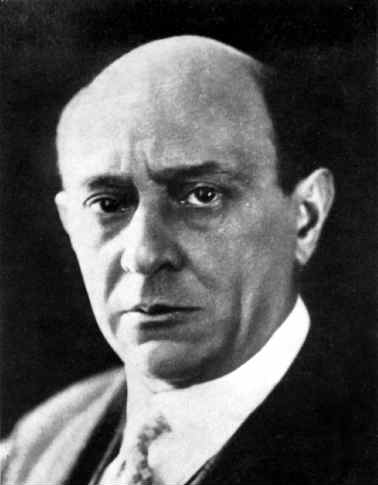
of the 12-tone school's early triumvirate (Schoenberg and Webern, being the other two).
You don’t say. And, what’s with, the, comma?
His Lyric Suite was born of an impassioned but apparently unconsummated love for a married woman.
So they say! What else?
Though written in 1928, Berg's Lyric Suite breathes an atmosphere of findesíecle
Although this could be an internet publishing error, someone should proofread these things. Fin de siecle (while I appreciate the italics) is totally ThreeDifferentWords.
Though written in 1928, Berg's Lyric Suite breathes an atmosphere of findesíecle Viennese decadence, the world of Gustav Klimt and Thomas Mann.
Even though…what? Thomas Mann: 1875-1955. Won the Pulitzer in 1929, the year after this particular Berg piece was published. Completely contemporary. Klimt died in 1918, but is still roughly contemporaneous with Berg and Mann. For no real reason, here is a picture by Klimt that is fun to look at.

The romantic inspiration is clear with its Tristan quotation but Berg deftly creates a kind of wrong-note Mahler, fusing subdued tragedy and emotional intensity within serial strictures.
Wrong-note Mahler. Seriously? Crap. (deep breath)
Berg wrote wrong notes!? What a lyrical emotional passionate chilly fool. Those damn serialists! They had no fucking idea.
The sense of romantic yearning and dark foreboding was clearly palpable in Friday's performance under Tilson Thomas. The burnished strings brought out the angular music of the opening movement as much as the mystery and elliptical strangeness of the multi-divided strings in the central movement and the dark-hued somber valedictory of the final section.
To sum up: Berg’s Lyric Suite is lyrical, passionate, emotional, and communicative, which mediates the cold chill of his technique of writing wrong notes, but is still angular, foreboding, elliptical, and dark-hued.Whee!
4/12/08
Uh... oops.
I ran across this weird little tidbit from Lawrence A. Johnson of the Miami Herald. There really is no easy way to... no. I know what he means, but... no. Maybe, he should have... no. Well...
Here it is:
At times, there could have been more unbridled animal passion from the Chorale members...
Apparently a quick Google search for “animal passion” will bring up more than one... no.
I mean, there’s loving animals, then there’s... no.
Just be careful, man; it’s a big, big world.
3/31/08
You're Doing It Wrong
Similes are not that hard.
One thing is equated, figuratively rather than literally, to another. Their meta-qualities are put into a kind of ratio, if you will. The reader is asked to find the similarities between objects that are, perhaps, not usually, or only tangentially, related.
By now, the Cleveland Orchestra's vaunted refinement and virtuosity are known quantities locally after two
Good.
Still, while owning a Rolls-Royce is nice, someone with skilled hands still needs to operate the controls.
Um. Okay, that is a metaphor, and not a simile, but…well…really? Normal drivers cannot operate a Rolls? Hmm. Continue.
Music director Franz Welser-Most's
Fine.
Now 36, Midori has been before the public since she was 10 and her artistry has only deepened, as was made clear in the Japanese violinist's revisionist take on Tchaikovsky's Violin Concerto.
Okay.
The Russian war horse is performed so often as a vehicle for surface fireworks and ego-driven solo display that one can forget the depths in the score.
Sure…
Like centuries of grime removed from ancient paintings, Midori's refined poetic sensibility made one appreciate this music anew.
The…
The sentence above insinuates that “Midori’s refined poetic sensibility” is like, in some way, “grime removed from ancient paintings”.
What?
Midori's sensibility is...like...grime?
I don't think that's what was intended here.
Let me take a crack at that failed sentence.
“Like ancient paintings from which ancient grime has been removed, Midori’s refined poetic sensibility…”
No. That equates the ancient paintings to Midori’s poetic sensibility. Which is similarly nonsensical.
The apparent meaning is that Midori’s sensibility reveals intricacies in the score that have been obscured (by centuries of War-horse-ness) somewhat like the removal of grime from ancient paintings reveals hidden details, or whatnot.
I think?
Reader challenge! Make it make sense, dammit!
3/20/08
"...Winningly Sardonic..." -The Detritus Review
(In a deep, gruff, intense, whispering voice)
From the minds who brought you the Russian National Orchestra, comes an imposing pianist,
Click here
an electrifying star of staggering force.
Click here
A pianist so jaw dropping, so strong,
Click here
you’ll vociferously ovate. A pianist, six-foot four and from the cold of Siberia, who brings massive strength and seemingly effortless power
Click here
to Prokofiev’s Piano Concerto No. 3; a pianist who brings a full-metal assault to a spiky warhorse.
Click here
Accompanied by a symphony possessed of a dark, deep-pile sonority with balances dominated
Click here
by its ample strings, Prokofiev will be set on fire. Together, they laugh at landmines.
Click here
They laugh at nuclear bombs.
Click here
The Miami Herald calls it, “...one of the most thrilling edge-of-the-seat adrenaline rides of the season.”
Click here
You’ll be left... high. His name?
Click here
Denis Matsuev. Can. You. Top. This? Coming to a theater near you.


2/25/08
Hyphens and New Music!
How to make modern music user friendly
Once again, someone’s style sheet forbids capitalization in titles. Why? Also, “user-friendly” should likely be hyphenated. (See previous post….)
However, this is exciting! We’re going to learn to do what the title promises, I hope. If not, I will be disappointed. And probably sarcastic.
The promising yet still-nascent state of
Minor points in re: hyphens: “Modern-music”? I think you mean “modern music”? “Still-nascent” is…fine. But it sounds like “stillborn”. Which is creepy.
A worthy example is Sara Laimon's compelling piano recital Thursday night at the Wolfsonian-FIU in
By “is” I think you mean “was”, because “offered” is past tense. Also considering that the concert took place [last] Thursday. Nitpicking. But still excited? How are we going to make modern-music user friendly? Or modern music user-friendly? Whichever.
A founder and co-artistic director of the New York-based experimental music group Sequitur, Laimon is an extraordinary musician with a prodigious technique allied to a communicative precision well suited to this music and evident in her user-friendly spoken introductions.
“Well-suited” should also have a hyphen, I think. But now we’ve got our “user-friendly” hyphen. At least you’re not consistent!
Are the “user-friendly” spoken introductions how we’re going to make modern music user-friendly? I can’t wait to find out!
Cast in seven sections, Brian Cherney's In the Stillness of the Seventh Autumn is loosely inspired by words of Debussy and T. S. Eliot, with music meant to evoke an open-ended mystery. Cherney fuses Impressionist elements with 21st century edge, as with isolated ''thudded'' notes, in which Laimon manually mutes the piano strings. There are aggressive outbursts, but a peaceful, limpid atmosphere predominates. The Canadian composer's work utilizes the entire keyboard, and Laimon made all the turbulence, subtle hues and stark effects register incisively with extraordinary focus.
You should meet my friend Empiricus. He loves adjective-laden phrases. I, on the other hand, love correct hyphen usage!
Harold Meltzer's Piano Sonata is likely the first work written in 2008 to be heard on the local music scene. The Brooklyn-born Meltzer is co-artistic director of Sequitur with Laimon, for whom this work was written. His Sonata was inspired by Cezanne's use of light and shade and effectively mines three-part sonata form with a graceful merging of tradition and contemporary style.
“Three-part” = well done! Still waiting for the explanation about the user-friendly thing, though.
There's a motoric, Prokofiev-like driving energy but also a distinctly American feel. Meltzer's sonata suggests early Copland in its spiky, acerbic writing, yet there's a compelling individuality in its quickly shifting meters, jazz-flavored syncopations and hushed coda. Meltzer, who was in attendance Thursday, will have his Piano Concerto premiered next month by Ursula Oppens with the Los Angeles Philharmonic.
I see a Mad Lib in your future! What about the…
At 83, Ezra Laderman was the most veteran composer represented. Written in 2002, his Piano Sonata No. 3 is an epic work, spanning about 50 minutes in three movements, with a middle part of 10 shorter sections.
…user-friendly…
The opening Fantasia switches expressive gears, going from violent outbursts to an uneasy, pensive calm. The final movement is a set of variations that grows increasingly agitated with moments of hard-won solace, closing with a quiet air of resigned transcendence.
...you were saying that we can make modern music…
Laderman withdrew the sonata's subtitle The Circus of My Mind, yet it's hard to avoid the feeling that this vast, varied central movement amounts in large part to a bracing self-portrait, given such descriptive titles as ''Mercurial,'' ''Forceful, Brusque,'' and ''Driven and Impetuous.'' Laimon showed complete mastery of this sprawling music in a tour-de-force performance that was alive to its brooding reflection as well as forcefully articulating in the bravura pages.
…user-friendly. Did you forget? Surely not. Surely your final paragraph will clear everything up!
Kathleen Wilson, FIU's new director of music, is a committed contemporary-music advocate, and perhaps such one-off events as Thursday's could be expanded into a mini-series of modern piano and chamber music at the Wolfsonian, with its intimate venue offering the perfect setting.
Is…is it the perfect setting that makes modern music user-friendly? Or the spoken introductions? One-off? Mini-series? Contemporary-music? Really? Ugh.
Oh, I get it. It’s hyphens. Sigh.