I’m not entirely positive that this is a slap in the face, but it sure seems like it.
[Pianist X] opened the concert on his own with an early Cage work, “In a Landscape” (1948).
You know who wasn’t born yet, in 1948? New Age pianist George Winston.
This is a side of Cage you don’t hear often, and you would be hard pressed to identify it as his work.
Possibly. Could you?
Its textures are gentle, rippling, vaguely Debussian, with simple melodies weaving through a tissue of arpeggiated, diatonic noodling.
“Noodling” is one of my top four favorite descriptors. Ever.
How odd to think that as a young composer, Cage wrote music that could today be mistaken as...
...as the back of Philip Glass’s (Glasses?) right eyeball? No? What, then?
...as the New Age meandering of George Winston.
Ugh. See? It just feels like a jab in the gut. Could Allan Kozinn be calling In a Landscape “New Age?” “Meandering?” Or how about “like George Winston?” Ever hear George Winston play?
Either way, I don’t like the implication; all three are pretty bad. It’s like, “How odd to think that as a young critic, Bernard Holland wrote reviews that could today be mistaken as the postmodern meandering of Allan Kozinn.” It just doesn’t feel right, for some reason. Subtle, indeed.
-
9/16/08
Subtlety and Mr. New Age: John Cage
7/1/08
Flee the Chicken or Fight the Egg?
Stuff like this turns me off:
...[Native Hungarian András] Schiff has made a further contribution to Beethoven's legacy.
It turns me off not because I don’t agree, but because I find it hardly necessary—Beethoven doesn’t need any more help climbing over others on his way up the stairway to heaven (two points: Led Zeppelin reference). I think Gary Oldman did enough (one point: Immortal Beloved reference). Sorry if that’s a little harsh. But, then again, everyone’s heard me go off on the ineptitude of Beethoven’s fugues (and that’s not even my idea!). So deal with it.
However, I’m not here to poke fun at David Weininger of the Boston Globe for thinking highly of Schiff’s Beethoven lecture. It really does sound interesting. In fact, David paints Schiff as very articulate, thoughtful and insightful.
Schiff's descriptive language is fresh; his turns of phrase, delivered in a broad Hungarian accent, succinctly capture the contours of the music.
Fine. He’s a regular Miklós Zrínyi. (five points) Whatever.
It's just that this master of rhetoric is not immune to circuitous logic.
"I think all human beings need a sense of coming home," he says.
Bernard Holland? Is that you? (one point)
"This is something I very sadly miss in today's music. . . . Because there is no tonal system, to me it's like a foreign language.”
For an Hungarian who rarely had the opportunity to use vowels in your native tongue, you seem to speak English very well.
“And this [the tonal system] is a language I understand."
There are multiple ways of reading this, of course. Instead of listing the different possible interpretations, I’ll just ask some questions.
Is it because you understand, or are familiar with, the tonal system that the less familiar non-functional harmony* leaves you cold? Doesn’t a familiarity with another language help your appreciation of it? How well did you understand English before you learned to speak it? Is it really because we desire a sense of return (coming home) that precludes non-functional harmony’s effectiveness? Isn’t “coming home” an admission of departure?
Just saying, which came first, the chicken or the egg? The need for coming home or home? The appreciation of English or the learning of English? Non-functional harmony or the tonal system? Dialectic failure for the chicken and the egg...
Communication breakdown, it’s always the same! (Two points)
-
*Here, I use “non-functional harmony” instead of “atonality,” because non-functional harmony can be used to describe triadic harmony, non-triadic harmony and atonality, all of which stand in contrast to a “tonal system,” here taken to mean functional harmony.
-
5/27/08
Parting Shots: Not so "so long," after all
Dear Detritusites, I need to ask you a big favor, well, two favors: One, please be patient, this is a long ‘un. But most importantly, two, would you please hold your anger-filled comments and death-threats until the end? This might sting a bit, but, if you can accept for a moment that I may not be entirely crazy, then this will be easier on all of us. Besides, if, by the end, you still feel the need to tear me a new one and shove a fistful of wadded-up Lachenmann scores in the open wound, by all means, go ahead. It’s your right, and I’ll take it with a grin on my face. Now, you could be asking yourselves, what could be so bad that Empiricus felt he needed to issue a disclaimer? Well, people, I’m going to throw-down with Alan Rich.
As you may or may not know, Alan’s post as classical music critic at the L.A.Weekly has been terminated. And this is his last entry at that post (though he’ll remain there, albeit in a limited role).
Parting Shots
I must say, at the onset, that we have not gone after his work, until now, because it is utterly stupendous. Aside from his keen knowledge and ear, his prose is gorgeous. Here, he puts his brilliant knack for imagery and insinuation into motion right away.
Helmut Lachenmann cuts a solitary figure in today’s musical world. At a time when much of the talk centers on accessibility, on a generation of composer-heroes — Adams, Adès, Reich, Saariaho, Salonen, just for starters — who have found ways to reach out to audiences with serious and imaginative creativity, that old notion of the composer on his private Olympus, proudly and defiantly cloaked in his mantle of inscrutability, rests almost solely with this tall, gaunt yet smiling German gent whose music ground its way through Zipper Concert Hall last Monday.
That’s ridiculously clever, maybe even poetic. However, what lies beneath this elegant prose—which, by the way, sets up the rest of the review perfectly—is almost pure anti-modernist venom, couched in populist (?) idealism. To get a better sense of what I mean, let’s take a closer look.
At a time when much of the talk centers on accessibility, on a generation of composer-heroes — Adams, Adès, Reich, Saariaho, Salonen, just for starters — who have found ways to reach out to audiences with serious and imaginative creativity...
He’s just setting up and defining the contrary, yet popular, point of view by naming Lachenmann’s aesthetic adversaries and their accomplishments. In fact, he’s hailing their accomplishments, while making clear that their work represents the present: “at a time when,” “composer-heroes.” This places Lachenmann, where?
...that old notion of the composer on his private Olympus, proudly and defiantly cloaked in his mantle of inscrutability, rests almost solely with this tall, gaunt yet smiling German gent...
Lachenmann is placed on Lonely Mountain, as it were. Or, as we’ve seen so many times before, in his own selfish, ivory tower. But he’s placed there as a relic (“old notion,” “gaunt”), happy to swim upstream. He’s seen as the last of a dying breed (“old notion...rests almost solely”).
Put all of it together we come up with something like this, which sounds a lot like someone else we’ve dealt with before: Lachenmann is an old-school, aloof, who-gives-a-shit-about-comprehensibility kind of composer-God, who doesn’t care about pleasing his audience, unlike “Adams, Adès, Reich, Saariaho, Salonen, just for starters,” who, by the way, are heroes. Salonen, really?
And also, apparently, good riddance, Lachenmann! (I read ahead)
Okay so far?
Well, no. I’m not okay. BEGIN STUPID RANT STOP Accessibility in music means popularity. If that was, indeed, the penultimate goal, then every composer would be imitating this guy. And the only things you get by imitating that guy, besides money and paparazzi, is awards. I mean, where are these composers now? Where is their music being performed? Are these popular Pultizer Prize winners in the canon?: Douglas Stuart Moore, Gail Kubic, John la Montaine, Robert Ward, Leslie Bassett, Richard Wernick, Stephen Albert (Seriously, Google them. YouTube them. Did you find anything? Any music?) What did popularity ever do for them? END STUPID RANT HERE STOP
Okay so far?
Yes, I suppose I’m a little better. Thanks. I needed to get that off my chest. Anyway... you know what? No. Come to think of it, no, I’m not better, because this tripe continues.
“He is the world’s greatest composer,” proclaim a few holdouts in the new-music community who dote on inscrutability.
Unpopular Lachenmann fan = doter on inscrutability. Great. Thanks, Alan. Thanks for nothing. Way to avert the unfamiliar! Way to close your mind! Way to conform. Baaaaah!
At them in response, I fling my favorite James Thurber line: “ ‘He’s God!’ screamed a Plymouth Rock hen.”
For those of you not familiar with “The Owl Who Was God,” here you go. Note the “moral” of the story, near the bottom. (I love unintentionally ironic references)
Now, in defense of poor Helmut, I’ll lob over a favorite Morton Feldman quote: “The only fanatics I have ever met were conservative musicians.” Take that, conformists!
Yet the concert drew a large crowd, and there were many who stood and cheered at the end.
That’s an ordinary, reasonable response; people go to concerts they might enjoy. This, however, isn’t a reasonable response:
I would love to know what they heard.
And why is that? Take it away, Alan!
Prior to this concert, I knew Lachenmann mostly from the ECM recording of his setting — “opera” in the broadest sense — of the Hans Christian Andersen story “The Little Match Girl,” onto which he has hung the whole paraphernalia of his “fractured aesthetic” (Alex Ross’ term), culminating in a horrendous musical mishmash in which the ghosts of every composer in Lachenmann’s own scrapbook, Mahler, Berg, Stockhausen, Boulez, pass by simultaneously as if in some horrendous wet dream.
A game: Find the Epistrophe!
(Jeopardy theme music)
Find it? The answer is: "horrendous." By repeating horrendous twice with regards to one subject, he’s strongly emphasizing how Lachenmann’s opera is (list of possible synonyms) dreadful, awful, terrible, shocking, appalling, horrifying, horrific, horrid, hideous, grisly, ghastly, gruesome, gory, harrowing, heinous, vile, unspeakable, (takes breath), nightmarish, macabre, spine-chilling, blood-curdling, loathsome, monstrous, abhorrent, hateful, hellish, execrable, abominable, atrocious, sickening, foul, nasty, disagreeable—you get the idea.
But, why wasn’t that a reasonable response? Well, “just for starters,” if a newspaper is going to assign a critic to review a concert, it might be nice if they sent someone who has a general interest in the music to be played. It might also be nice to have a critic open to new possibilities, instead of one who can’t fathom alternate definitions of “opera,” in quotation marks (in quotation marks: in "quotation marks"). Also, also it might be nice if the reviewer was familiar with the music, you know, say the reviewer knew more than one piece by the composer. Just an idea. But who am I to question these things?
Does that lovely, sad Andersen story deserve that?
I didn’t know stories deserve things.
Do we?
To be fair, I don’t know that we deserve “horrendous wet dreams,” either.
Did we on Monday?
Hell no! Everyone is aware that we only deserve “horrendous wet dreams” on Tuesdays, and sometimes Fridays depending on the tide. Mondays are simply out of the question, what with the morning rush-hour commute and all!
But I digress, too. Go on, Alan. Spew more Lachenmann derision.
I had never before endured pain at a Monday Evening Concert; this time I did: pain and anger.
You can’t blame Lachenmann for the burritos you ate at lunch! Lachenmann + burritos = the runs.
The music by [...] Helmut Lachenmann reflected the nastiness dear to so many German and Austrian creative hearts these days.
Whoa! Where’d you come from? Who are you? Get out of here! Go. Get!
[...] Mr. Lachenmann's ''Movement (Before Paralysis)'' seemed almost to jeer at the easygoing spirit and borderline sentimentality of the [preceding] American pieces [...].
Shoo, I said! I mean it!
“Movement (Before Paralysis)” seems proud of its complications. Hard, angular, percussion-ridden, highly uneven in movement, this is the art of unease. Mr. Lachenmann produces wheezes, whines, shudders and whooshes that are sophistication itself.
Go on! Get out of here! And stay out! That's better.
“Played,” by the way, often consisted of blowing through only the mouthpiece of a wind instrument, banging on the case of a piano, delivering frenzied blasts through a brass instrument and otherwise violating the customary sound possibilities of various instruments.
But that’s not new. However, saying that Lachenmann rapes the instruments is new; that’s a new one on me, anyway.
Such procedures are not new,
See.
and they have a certain joke value the first time around.
Odd, but not necessarily new, procedures = a joke, the first time around. Just like sul ponticello, right?
The Lachenmann works were long enough to allow these things to happen several times, and you all know what happens to a joke when you tell it more than once.
It gets old. I got it. You were clear about tha...
Hold it. (sniffs the air for a cheesy taint)
Mr. Rich, sir. Are you saying that...(thinks... “grmphblhpt”)...I don’t know what you’re saying. See, if you’re saying that novel sounds are a joke, but lose their comic luster (?) when repeated, then... I mean, if you’re saying that odd instrumentations, which may not be new, are funny, except when they’re reiterated, which makes them bad things, then...
I’m confused. Let’s go backwards.
These things I can grasp and accept: Lachenmann is not popular. You don’t like his music. Presumably, you do like Adams, Reich, etc. (Salonen, hmmm). They are (more) popular/accessible.
But, therefore...? Lachenmann is a joke? Because he’s not accessible? Because he utilizes odd sounds? Because he’s a modernist? Because his music causes the runs?
There’s a “parting shot,” indeed. (super-slow fade to black)
-
If this had been an actual meta-critique, this is how it might have gone. But, fortunately for Alan and a number of you, this is where your patience will be rewarded, because it was not a critique, per se—even though a lot of points stand—because, Alan, like I said at the beginning, is a fine, fine critic, a critic we’ve never before tried to tear apart. Then why go through all this rigmarole, Empiricus? Why parody yourself? So I could make obvious that there is almost no difference between Alan’s opinions and those of other critics, opinions that generally warrant a long, scathing Detritus-like whipping.
What’s the difference, then? Simple. First-person.
Listen, I don’t agree with anything, anything in this review (except maybe the part about Lachenmann being one of the last modernists). Let me just make that clear. Alan and I have polar opposite opinions. I don’t think that if we ran into one another at a concert, that we’d become BFFs.
But, because he uses the pronoun I to express himself, I can’t fault him. Everyone is entitled to their own opinion. And he’s calling it as he sees it. No disembodied, third-person generalizations vomited as objective truth. Just him, and his opinions.
I can’t fault Alan, but I can fault the newspaper higher-ups and whoever gave Alan that particular assignment. I think its pretty clear that Alan can’t stand Lachenmann’s music nor “ivory towerites.” Then why send him to review a Lachenmann/modernist concert? That makes no sense. “Let’s send ol’ Mel Gibson over to cover the bat mitzvah.” That doesn’t make any sense either. So why do it?
-
5/15/08


5/13/08
Ho Hum
Another Bernard Holland article. Ho hum.
Schoenberg and his school do not make us smile,
(yawn) Ho hum.
but then, they rarely try.
Ho (yawn) hum.
Ho. Hum. Yawn.
-
4/30/08
Prescient and Archaic! Yeah!
Today, having some fun searching the NY Times archives--we're getting to that point in the concert season where classical music reviews and articles begin to slow down a bit--I stumbled across one of the most prescient thoughts ever, written in 1988. Take a step back, and it could even be the most succinct and eloquent mission statement for our little project.
It is a fanciful thought, but perhaps our century is feeling the pressure to tidy its house, settle on its strongest languages and discard its detritus while it still has time.
Ironic, because it’s also a jab on Morton Feldman and Olivier Messiaen.
-
4/27/08
Composer of the Day!

Today’s Composer of the Day is Peter Eötvös.
(b. 1944)
Born in Transylvania, Romania, Peter composed for Hungarian films and played in the Stockhausen Ensemble, before succeeding Pierre Boulez as director of the Ensemble InterContemporain from 1978-1991. He also figured prominently at IRCAM.
His music tends toward the dramatic; he has written a number of operas, stage scenes, and orchestral works that include theatrical action. His piece Triangel is a concerto for percussionist who roams about the stage focusing on a particular instrument or sets of instruments. Also, the piece is notated without fixed pitches, but relative pitches. Only the rhythms are determined.
Peter is an accomplished, well-decorated conductor and teacher, as well. His music has won numerous awards and stuff, too.
A critic to remain nameless (Bernard Holland) has said this of his music:
You can enjoy Mr. Eotvos’s music without trusting it. His three-movement “Chinese Opera,” brightly done on Saturday night by the St. Paul players, is a construction of many moving parts and brilliant sound effects. Yet you feel at the gun-end of a sales pitch. Innovation has been left to fill the holes that lack of wholeness and substance creates.
I, on the other hand, find his music to be terrifically exciting and energetic, with a clear knack for dramatic effect.
You should listen to his music.
I also need to mention, if only to shed a little light on Peter’s character, that the photo was taken by Bernard Perrine. It sure is fun to look at.
-
4/25/08
Today, I Heart Tom Strini
Today, I heart Tom Strini, because he wrote intelligently about music, an incredibly difficult thing to do.
I must admit that I was expecting some new music hating after reading this title.
Chamber series conquers diverse mid-century pieces
One of our biggest problems with music criticism is that, often, critic X (e.g., Bernard Holland) paints the performance as overcoming the difficulties, or the stink, of new music. I dare any critic to do the same with Beethoven—by the way, fuck Beethoven. And this is what today’s title suggests.
Tom’s review thus begins. And unfortunately, it begins with a grand, sweeping generalization.
Repetition defines musical structure and allows us to comprehend it.
Holy shit! The grand, sweeping generalization...makes sense! Congratulations, Tom. This is a significant first. Too bad it can only go downhill from here, right?
Verses and choruses repeat. Recapitulation follows development, so we can locate ourselves in sonata form. On the creative side, recurrence frees composers from the burden of constant invention.
I am beside myself. An entire paragraph that works: ideas are related (another first); you have correct, educated information. Wow. Just, wow.
It can’t get better, I keep telling myself.
Carlos Chavez's 1966 "Soli IV" for brass trio, heard Thursday on a 20th-century program at the Chamber Music Milwaukee series, is so radical because it takes on that burden explicitly. "Soli IV" has no past and implies no future. It does not ask the listener to remember what happened and relate it to the present moment. The immediate sonic neighborhood - the gestural cluster of notes in front of your ear at a given moment - is all that counts.
Tears of joy are running down my usually disgusted scowl. What a beautiful description! And exactly (relatively) what was happening at that moment in time—Tom’s not a guy who’s afraid to show that he’s read a few books.
Normally, we’d get something like this, instead:
Think of a street with moving traffic and traffic signals, with one composer showing red and the other green. Mr. Stockhausen's music was telling us that if the Chopin tradition had carried piano playing from 1840 deep into the 20th century, "Klavierstücke X" was determined it would go no further. Here the instrument is taught a lesson it will not soon forget.
Instruction came in the form of assault: blows to the keyboard with elbows, forearms and palms, episodes violent to the point that [pianist], the evening's intrepid pianist, wore cut-off gloves as a kind of body armor. Fingers were, however, left free for the shrill glissandos and racing stepwise movement.
Usually, this is what we get (from Bernard Holland), a condemnatory, dismissive verbal whipping.
Tom, on the other hand, gives us a colorful description of what happens in the piece, the philosophy of its aesthetic and a sound strategy for listening to it. And, my favorite part, he doesn’t outright dismiss it as junk. Nor does he resolve to not understand it.
Plus, the title now makes sense. It's simply conveying the notion that these pieces are diverse not crappy. Amazing! My bad; I'm used to assuming the worst. You go, Tom!
He does have an opinion, though.
That's a peculiar way to put a piece together, and I wouldn't recommend it.
You’ve earned your opinion today, Tom. You didn't have to follow that up with:
But
“But?” That’s wonderful! Admitting that your opinion is yours, alone. Can I send you a Christmas card?
But "Soli IV" is a fascinating and gallant experiment in musical perception, especially with Kevin Hartman (trumpet), Gregory Flint (horn) and Megumi Kanda (trombone) fully investing in every note in every fleeting gesture. I'm glad I heard it, even if can can't remember any of its particulars.
Beautiful (smile cracking through the leather-like frown, tears still streaming). Simply beautiful. And the rest is pure gold, too.
Good work, Tom!
-
I am hoping that we, at the Detritus, have more opportunities to depart from our usual snarky/rude rants and praise praise-worthy critics.
-
4/23/08
A Little Night Probing with a Knotty Schoenberg
In Sator Arepo’s recent post, Bernard Holland suggests that George Pearle’s music is like something from outer space. I’m not so sure that Bernard isn’t on to something.
We all know that Schoenberg’s Violin Concerto
usually comes off as an icy monolith of modernism.
Right?
Who then could possibly untangle Schoenberg’s spaceman-like naughty knots?
Who could bring out his latent, other-worldly romanticism?
Who could beam 30 fiendishly difficult, atonal minutes down into 12-tone ribbons of lyrical melody?
I think it’s clear. Thank you Mr. Holland.
The answer?
...
Shhhh. They might be listening, waiting to take over the world, or subliminally supplying us with bad writing about Schoenberg.
I know who can do this. But you have to keep it to yourself, in case you get probed. Just be quiet.
....
It’s.
...
Aliens, who look like us. (artist's rendering)
...
Here’s one of them.
...
And another. They can look like music critics from the Detroit Free-Press, too.
Now that you know, here's Schoenberg.
-


4/22/08
Schizophrenia?
How can these two articles have been written by the same person?
This:
Pianist Born to the Colors of Chopin
and this:
Rocketing to Inner Space, Defying Tonality
were both written by the venerable Mr. Holland of the New York Times.
How is that possible?
The first review has insightful, interesting observations about both the performer and the music.
The rippling, racing E flat Impromptu from Schubert’s Opus 90 was a nice advertisement for Ms. Fliter’s visceral alertness and clean scale-playing. The C minor Impromptu that came before it indicated further decisions to be made. I hope at some point Ms. Fliter will decide that this piece’s tragic mood is better expressed with more thoughtfully articulated dotted rhythms and that Schubert’s marvelous countermelodies need phrasing more elastic and less thumpingly foursquare.
Fantastic. Nuanced. Thoughtful.
However, the Perle article contains gems like these:
GEORGE PERLE, who turns 93 next month, is a rare survivor of a disappearing movement. The general public will barely notice its departure, given that not many people know it ever existed.
I…you…crap. Tons and tons of people know this music (serial, atonal, and/or 12-tone) existed (exists! Hello! Present tense, please.). It has been widely studied, commented upon, cherished, and in some cases, derided (by, for example, Mr. Holland). Even people who do not like, say, Schoenberg, know he existed.
Mr. Perle belongs to a second generation of explorers. I doubt there will be a third.
You hate it. I get it. There will be a third generation of serialists, even if a small one. Shit, I’ll do it myself if I have to, just to prove you wrong!
It is not a question of quality.
Yes. Yes! I…
His atonal compositions, 12 of which
Hilarious. 12. Tones. Compositions. What?
are collected in a two-CD retrospective on the Bridge label, are like well-cut jewelry: small enough to hold in the hand, diamond hard yet smooth to the touch, and shining with reflecting light.
Nice of you to paraphrase Stravinsky (in re: Webern).
I admire Mr. Perle’s music, although I can’t say I like it very much.
You…admire it without liking it. ‘Kay. How is that…
He speaks a language he and his contemporaries made up.
Tonality is as much a made-up language as atonality or serialism. Ask a dude from Bali (or
I can speak only the languages I was born to.
Tonality. English? Ye Olde English?
Sometimes I feel guilty. Maybe I should work harder at his grammar and vocabulary.
Maybe. Or, rather: yes. Either that or someone else should review concerts of music you just plain don’t like.
With age I feel guilty less and less.
Sure, fine. You’re old. I forgive you that. Still, I’ll bet there was atonal music composed before you were born. Or educated. Or became a critic for the leading daily newspaper of the Free World.
How did all this atonality business start?
I bet you’re going to tell me!
A number of 20th-century composers said that it was the necessary next step, that old ways of listening had worn themselves out.
Listen to some Mahler. Tonality was making a mockery of itself. Pieces were ending in places they didn’t begin. The system had collapsed under its own weight. Some composers (say, Rachmaninoff, or Barber) chose to soldier on. Others (Schoenberg etc.) chose a new direction. I could go on forever, and list innovations in Western music. I imagine that the critics in the 1700s were horrified when modality gave way to tonality. What?
It sounds reasonable to say that Anton Webern’s Piano Variations take up where Brahms left off.
Voice-leading, baby! Just like Bach takes up where Josquin leaves off. What? No?!
I admire the Webern; I even like it for its strangely satisfying space-age spirituality. I don’t think it has anything remotely to do with Brahms.
Sigh. Fine.
The Webern, and music that constitutes Mr. Perle’s immediate heritage, is altogether new.
New = 100 years old. I’m not sure if you new this, gentle readers.
-
Sator Arepo: “Hey, do you have the new newspaper?”
Alarmingly Mustachioed Newspaper Guy: “Sure, here ya go! That’ll be ½ cent!”
SA: “This is from 1908!”
-
It is as if music history in the mid-1920s had stopped dead in its tracks and started again from scratch.
Or art, poetry, painting, sculpture, literature, poetry, film…the turn of the last (next-to-last?) centruy was wacky, with good reasons. Far too many to elucidate here. Next they’ll be playing electric guitars!
Composers of the
No no no no no no no no no no no no no no no. “Divine right”? Sorry, no. Jesus. Or rather: aJesus.
Serialism was their
What? I had to look up your reference. Fabulous: you’re extending your “mutiny” analogy. Wow. Just…wow.
Freedom to reinvent was one result, inbreeding another.
I don’t know what that means. I don’t know if what you’re saying means anything. Is this the same author that wrote the thoughtful piece about the Argentinian pianist Ingrid Filter?
Until the 20th century musicians obeyed natural laws of physics. Pick up a rock, drop it, and it falls to the ground. Music was the same. Send a piece of music up in the air, doctor and twist it, make it major, minor or modal; in the end it wants to come down to where it started. You can call the process tonality or music’s law of gravity.
Oh, God, no. I can’t do this anymore. Why? 16th century ring a bell? Mahler symphonies? The…staggering…metaphor…is not true.
I’m exhausted. A few parting gems, and then you can read the balance of the article if you like.
If Mr. Perle is a jeweler, he is also an architect, and you can think of these pieces as buildings. We admire them for clear thinking and precision. Still, not many people want to live in them.
What? You...I...what am I supposed to do? Live in tiny atonal diamonds?
It is interesting that Mr. Perle’s take on 12-tone music flourished just as space travel was coming along. He and eminent colleagues like Milton Babbitt and Elliott Carter were our musical astronauts. They defied gravity and left Mother Earth behind. Music soared into space. Out there in the ether a minor second would sound just as peaceful as a major third. Laws were necessary, for with everything now possible, nothing was possible.
Oh, come on. What? Seriously? Astronauts?
It may not be overly fanciful to compare the Black Death to AIDS, or the three-dimensional musical crossword puzzles of monkish scholars to the Babbitt Piano Concerto that so bewildered audiences and critics at Carnegie Hall a few years ago.
I have absolutely no response. Except: What. The. Fuck.
Postwar prosperity helps explain how a musical style attracted so much attention and yet was listened to by practically nobody. As academia and cultural foundations flourished, composers could write music to please themselves and one another and still make a living. Unappreciated genius and the consolations of posterity were conveniently popular conceits. American fascination with science and engineering and disgust for a tired European tradition made serial music and other rule-bound procedures a great new adventure. As with space travel, its practitioners were select and its methodology graspable by a chosen few.
As, Empiricus might say: YOU’RE NOT HELPING. Critics help shape the populace’s attitude and understanding of music. This is encouraging people not to even try to like or understand said music.
A MEMO
From: Sator Arepo
Re: “New” Music
Sator Arepo
4/1/08
I'm Really Tired of This Dreck
Here’s another Bernard Holland train wreck, which doesn’t justify my time, nor anyone else’s time. So, I’ll just give you a link and a parting faux pas.
The link.
The faux pas:
And “Eine Kleine Nachtmusik,” almost a part of popular culture by now, was swift, clean and gimmick-free.
My italics. Eine Kleine Nachtmusik. And another Eine Kleine Nachtmusik. Enjoy, you Detritus masochists.
3/27/08
Does the NY Times know that 300-year old Bernard Holland still writes for them?
In the 18th century the piano danced. In the 19th it sang.
What a beginning. Where could we be going next? I’m already bored.
The 20th century liked to use the piano as an assault weapon.
Of course. I didn’t expect anything otherwise.
This lovely review is about one concert of three produced by composer-pianist Joseph Rubenstein.
The choices may represent the tastes of the composer-pianist Joseph Rubenstein, curator of the event, but it may also tell us about current events in musical politics.
We know. Assault weapons, etc., etc.
It was interesting how so many of these items ended on simple Mozartian triads.
As his ears perked up in a way they haven’t since 1791.
I may have been imagining a collective sigh of relief,
It's called Alzheimers.
... but something seemed to be whispering in my ear that the Dark Ages of postwar atonality were over and tentative reconnections to the past were under way.
I had a conversation with co-conspirator Sator Arepo a few days ago where we discussed our blogger-tone. And well, sorry SA.
What the FUCK??! Seriously, does the NY Fucking Times know that 500-year old Bernard “Alzheimer” Holland, the fervent musical bigot, still writes for them? Why would THE leading daily give a 600-year old music hater free reign of a music column? Are they stupid? Do they edit? Do they suggest changes? Do they have fucking brains? Are their ethic sacks located in the politics department, instead? Apparently, no. They don't have ethic sacks, anywhere.
I hold the NY Times entirely responsible for this hateful dreck. Screw the crossword puzzles.
Give me Jerry Cantrell any day of the week.
By the way, what the fuck about “musical politics?” Huh? You don't have anything else to say about that? Nevermind, then.
3/15/08
911. Is this an emergency?
I’m not sure.
What is the nature of your problem?
There’s this couple at Weill Recital Hall. They’re fighting, again. The man seems to be instigating the fight.
I’ll send the police, sir. Can you stay on the line?
Yeah, sure.
Can you describe what the man is doing?
It’s difficult to describe. I’ve seen them do this before. The woman has a temper, but she usually keeps it in check. But this guy, he just seems to have "brought out the worst in her." And what’s more, she takes it out on everyone there.
How do you mean, sir?
Well. She’s a pianist.
Excuse me, sir. Did you say pianist?
Yes. Hold on! (ducks from hard-flung tritone, followed by a minor second)
Can you describe what the pianist is doing?
She’s playing.
Playing what, sir?
Elliott Carter’s Piano Sonata from 1946.
Can you describe the pianist, sir?
Uh, If this pianist has a principal trait, it is a big, hearty and sometimes brutal relationship with her instrument.
Can you describe her relationship with the instrument, sir?
It’s like she seemed to play the piece with fluency and enjoyment. I mean, she just snapped.
Can you please describe the man?
He’s not actually here.
Can you repeat that for me, sir?
He’s not actually here. His name is Elliott Carter, though. He's a composer. I’ve seen him before. He’s "pugnacious" and "invites the performer's aggression."
Can you describe what he looks like?
He has white hair. He’s a little slow. Oh! And he’s 99.
99 what, sir?
Years old.
(911 operator hangs up. End of recording/transcription)
3/12/08
Give Em a Shot Across the Bow
When you say shit like this,
So much nontonal music contradicts itself by grafting a new language onto old sentence structure, creating Brahms with wrong notes.
...you had better be prepared to back it up, because I’ll come after you like stink on a cadaver.
So, my little scholar, back it up!
Not so Webern, whose musical grammar is as innovative as its vocabulary. The Variations here took on the shape of spoken conversation: question and answer, proposition and response, and the silences in between.
No. Bad. (rolls up the newspaper, swats) No.
Don’t think that I’ll let you evade responsibility, even if you praise Webern. Defend your stupid statement!
You might call him the Janacek of outer space.
As humorous as this may be, you don’t get a free pass. Give me examples, proof, anything that might convince me, the reader, that nontonal music contradicts anything; that Brahms is inherently complex; that the metaphor of music as language is apt; that wrong notes are bad!
Critics, you can’t just say shit and not be held responsible. If this was on the front page, Bernard Holland would be fired! As a reader, I have no sympathy for word counts or deadlines. No excuses, this is plain awful.
-
3/11/08
The Seven Trumpets are Sounding!
Bernard Holland singing the praises of Iannis Xenakis, the ultra-modern French/Greek mathematician/architect/composer who had one eye? Why yes it is.
Iannis Xenakis’s “Rebonds B,” with its alternating bass drum and woodblocks, was the evening’s shortest yet most substantial moment, offering a sobriety and studied imagination that made a lot of the music around it seem not very important at all.
I don’t mind rivers and seas of blood, too much. I just hope we can skip the plague of locusts.
-
3/9/08
Composer of the Day!
 Today’s Composer of the Day is Milton Babbitt.
(b. 1916)
Yep, that’s right. He’s almost 92! Though, I won't hold my breath for the same fanfare that Elliott Carter is receiving.
Perhaps the most serial of serialists, Milton Babbitt was born a mathematician in Philadelphia, where he learned to love the hometown A’s when they still had Jimmie Foxx and Lefty Grove. Milton even saw Ty Cobb at the end of his career.
His music is often the recipient of the most belligerent critical attacks. Superficially, he embodies the stereotypical image of the all-white, elitist, academic, born-into-prosperity modern composer living in an ivory tower. He is white; his music is not for everyone; he taught at Princeton and Julliard; and lives in a cream-colored high-rise in Queens.* One of his essays, Who Cares if You Listen, still evokes strong anti-serial, anti-rational thinking sentiments.
Even Bernard Holland once surprisingly took the high road when describing his music.
Perhaps if we could solve the puzzles and answer the riddles, a secret drama of powerful symmetry would be revealed. Joyce's whimsical dictum that he was due the reader's undivided and enduring attention might apply here, and so I respectfully leave it to Mr. Babbitt's devotees to go about their work.
Now that’s restraint!
But I’ll let Babbitt speak for himself. This comes from a speech that appeared in the Journal of the Arnold Schoenberg Institute, in 1976.
Ours was an upheaval within a cosmic cataclysm, and there were the inevitable mutual shocks of new cognitions, of old oppositions only slowly and slightly reconciled, but the frictions paled beside the stimulations. If we [American composers], trying to come of musical age, sinned on the side of anxiety, oversusceptibility unto naivete, even gullibility, it was with a voracious enthusiasm and energy born of the unnatural suddenness of our new situation.
You can listen to his music here at New Music Box—his pieces usually have goofy titles, like Around the Horn, or Three Cultivated Choruses.
Milton is also a connoisseur of beer! Elitist beer, like Long Trail Ale.
You should read his stuff and listen to his music.
*May not be true.
2/14/08
On Avoirdupois, Practical Urges, Helpful Transcriptions, and More!
You got me,
avoirdupois \av-uhr-duh-POIZ; AV-uhr-duh-poiz\, noun:
1. Avoirdupois weight, a system of weights based on a pound containing 16 ounces or 7,000 grains (453.59 grams).
2. Weight; heaviness; as, a person of much avoirdupois.
(from dictionary.reference.com)
Ok. Avoirdupois. Let’s go!
Why, Beethoven, You’ve Gone Mahlerian
Gustav Mahler’s orchestral transcription of Beethoven’s Opus 95 String Quartet suggests that inside every thin man is a fat one trying to get out.
I…uh, what? It suggests that thin people secretly want to be fat? What?
Such urges for physical change are usually practical ones; artistic advantage tends to be accidental.
The urges…are practical. It is practical to want to be fat? And sometimes…fatness has artistic advantages? I do not understand this opening paragraph. I think I'm getting a headache. But let’s keep reading!
Mahler, as conductor of a big orchestra, wanted the opportunity to have an admired chamber piece for himself.
Mahler wanted to have an admired chamber piece…for himself. So he orchestrated it? For himselve’s orchestra? I think I’m coming down with something. Maybe I secretly want to be fat. Ok, fatter.
The Curtis Institute of Music in
Ah, good. I understood all of this. I’m starting to feel better.
Although the notes stay the same, avoirdupois has a major effect on most music.
It does what? Gets…fatter? More instruments = fatter music, I gather, Orchestrating a piece is metaphorically making it bigger. I see, maybe. And the result is…having an effect? A...major...effect. Oh, no, I’m getting dizzy again.
The results can be instructive, sometimes helpful and sometimes not.
The…effect can be…instructive. But not helpful, except sometimes? To whom? Where’s my Pepto-Bismol?
For rehearsal purposes Stravinsky reduced his “Sacre du Printemps” for two pianists, draining away its color and heft but providing a clarifying X-ray view
Which is, I take it, helpful? Can transcription give me X-ray vision? That’d be awesome!
Dvořák orchestrated his piano four-hand “Slavonic Dances” and did it well.
Which was helpful? Or instructive? Both? So woozy…
The art of transcription’s biggest success story might be Haydn’s “Seven Last Words of Christ.” Using the common marketing strategy of the day, Haydn reduced his orchestra original to a string quartet, providing manageable and salable home entertainment for amateur players. The intimacy discovered may be more compelling than in either the orchestral version or the choral adaptation he also made.
Head…clearing. Sentences are beginning to have meaning again. Okay. Deep breaths. I think I understood this. Haydn’s transcription was helpful to amateur musicians, because they could play music normally relegated to the concert-going experience. Helpful, presumably, to him, too, since he could make extra Deutsch marks, or whatever they had then. But was it instructive? No one will say. Is “compelling intimacy” instructive? Or…helpful?
As played by the dazzling young Curtis musicians, Beethoven-Mahler had the disadvantage of sounding too beautiful.
It…what? Oh, crap, waves of nausea returning… It had the…disadvantage…of sounding too beautiful. It sounded more beautiful than it actually was? Migraines…
Different string sections resonated and echoed with unintended grandness.
Uninteded by whom? The orchestra? Conductor? Beethoven? Mahler? Perhaps I’ll lie down for a little while.
Given the exceptional ability of the ensemble (all strings for this piece) to articulate busy detail, this was still powerful Beethoven but of a different sort.
The orchestration of the quartet was different than the quartet? I…yes. Was it helpful? Instructive? Both? Neither?
Missing was the grit of a single instrument on a part, the sweat emanating from four players hard at work.
Yes, you lose that when going from quartet to orchestra. That is fair. Was it helpful?
This is tough, wiry music. Overeating does it no good.
The music ate…what? Room…spinning…
Beethoven’s jarring harmonic subtleties and changes of pace survived.
Survived…eating?
A superior conductor’s knowledge of balance and emphasis, and his skill at conveying that knowledge, made the difference. Mr. Gilbert does not cut a glamorous, charismatic figure, but I hope the Philharmonic will buy into his music making.
Um. Me too? I’m still confused about helpfulness and instructiveness.
Ok. I think we got off on the wrong foot here. Let’s talk about something else. I might feel better.
Samuel Barber’s “Overture to ‘The School for Scandal’ ” started the evening, recalling a 21-year-old composer’s glamorous and charismatic introduction into public musical life.
Good. I understood that. I’m pickin’ up what you’re layin’ down. Perhaps I…
Given Mr. Gilbert’s recent residency in
This seems logical. I am totally afraid of what’s coming next. Something helpful, I hope. Or at least instructive!
I wish I had kinder thoughts for it.
You wish…I can’t…what? You don’t like it? You know, you can just say that. Type it out in a word-sentence. “I don’t like it very well.” Or something?
Nielsen’s reputation as a Scandinavian giant
He was a giant! Oh my god! I had no…
arrives mainly by default.
Oh, a metaphorical giant. Too much avoirdupois?
After Sibelius and perhaps Grieg, he is the man, but the gap between them and this Dane is wide.
Perhaps the "gap" has avoirdupois? I'm confused. Again. By your writing.
Nielsen is a nice composer: a little north of good, considerably south of great.
Great is…north of good. Is it near
Every gesture in this piece sounds civilized and heartfelt, and yet there is a sense of absence. One looks with frustration for the arresting idea or the fulfilling turn of events. People complain about Nielsen’s lack of prominence, but these things are usually for a reason.
You don’t like Nielsen. Fine. How about a tidy summary for your last sentence? Perhaps something helpful and/or instructive!
Charlotte Dobbs and Adrian Kramer sang briefly in the slow movement. The orchestra playing was beautiful.
Oh well. I guess I’ll just call in sick.
I seem to have used up my quotient of three-dot-ellipses for the day. I’m out. But I hope I get to use the “avoirdupois” tag again soon!
1/22/08
Mr. Holland's Opus
My last post criticized a long-standing NYT music critic. But who am I to lambaste such a bastion of the nation's leading daily? I began to feel unworthy, a silly blogger who cherry-picked an article, perhaps not representative of the author's oeuvre, to deride. Yes, perhaps my snarky commentary was undeserved.
Until I found this. It is quite recent, and made me quite angry.
CRITICS are sometimes asked how they prepare for premieres.
I'm pretty sure the passive voice is frowned upon in writing. Someone's getting Strunk & White for Christmas!
In my business a new piece is a threat;
That sounds like a problem--
it strips the writer naked.
...
Unlike Brahms’s Fourth Symphony, it springs from nowhere and asks on the spot to be loved, hated or endured.
Wait. What? Brahms' Fourth sprang from...what exactly? It, too, was once "new music" and bore all of the responsibility and onus that new music bears today. And really, does a new piece ask anything more than to be listened to? Didn't (anecdotally) Boston's Symphony Hall once feature signs above the exit that read Exit Here in Case of Brahms?
Is prior knowledge a kind of cheating, or does a look at the score or a visit to the rehearsal hall create a cushion of experience, something that makes new music more “understandable”?
If you have already heard (or read) the piece, maybe a premiere is not a premiere at all, but that flash of newness warmed over.
(Referee): Flag: personal foul, un-diagrammable sentence. Five yard penalty.
In any case, is newness for newness' sake a virtue? Or not?
At any rate, preparation signals a critic’s work ethic, an obligation to reach out (or up) to a composer, to speak his or her language, to enter someone else’s territory and ask for directions.
This seems reasonable. Given the abundance of styles in which contemporary composers are writing, each piece should be considered on its own merits, and within its own style (which could be defined by one piece!). Consider that, in the same time frame (say, the 60s), one could attend a concert and encounter such disparate approaches as those of John Cage, Terry Riley, Karlheinz Stockhausen, George Crumb, Pauline Oliveros, or maybe even The Beatles. John Coltrane. Captain Beefheart. Artists define their own styles and genres. So, Holland, I'm with you!
The more I follow this line of thought, the more irritated I get, for haven’t we got things backward?
I am not with you.
Shouldn’t composers be preparing for me rather than me for them?
I think you mean "I for them." Strunk & White for Christmas!
Also: what? Composers, I suppose, should conduct market research to determine what kind of music people would like to hear. The "artist" should not "create" or "express" anything, the artist should, I guess, fulfill niches in the market? Follow current trends? Satisfy demand? Gee, I'd hate to think an artist would, I don't know, challenge a listener. Or critic. Which is like a listener, but worse.
By “me,” I mean not me the critic but me the audience member in general. A new piece owes less to critics than to anybody else. Listeners paid for their tickets; usually we haven’t.
Uh, wow. The composer should prepare for...the audience? People who make "art" (such as it is) should...pander? I thought we were talking about "art" music. If your goal is to be popular, composer is probably not your best career choice. People write music. People who write music like to get their music performed, and heard. People who write music are pleased when people like it, I reckon. However, getting people to like you is not the goal of writing music. Is it?
Repeated hearing can correct or deepen first impressions.
Okay. Sure.
It can just as easily confirm initial boredom or distaste.
Fine. Have opinions and taste. That's awesome with me.
I can listen and be dead wrong,
I don't know what that means. I don't know if what you're saying means anything. What would that mean, to be "dead wrong" by listening? You...were wrong about...the structure? The form? The...point? Meaning? What? Taste? Purple Monkey Dishwasher?
but I reserve the right to that immediate impulse and so should everyone around me.
The impulse to be dead wrong? Predicate something something.
In classical music the onus of responsibility has been shifted from creator to receptor.
Wow. Well, reception theory is one thing. The "myth of authorial intent" is another. The meaning of a work, I guess, is as much dependent on the listener as the creator. But that's not what you're pushing here, is it? No. It's not. You want to be pandered to. You wish it was 1774 and you're at the new Haydn symphony.
Do I owe the waiter a good tip, or does he owe me good service?
This is the worst argument ever. Arts = service industry. "Hey! Asshole! Your painting sucks! I want my price of admission back!" If you don't like coffee, don't go to Starbucks. If you don't like new music, don't go to new music concerts. Oh, it's your job? Sucks to be you! Maybe you should have been a laborer.
Give me your hand, your time and your devotion, says the ambitious composer, and I shall lift you to a level of understanding that will make you love me.
I know lots of composers, and none of them have said anything remotely like this to anyone, ever. Not even metaphorically. Mostly they're like, "Fuck! I have to get this commission for a wind quintet done by Tuesday!"
Beware of disliking my new piece lest you betray your ignorance. If anyone asks you what you think, just reply that you need to understand me better. Then change the subject.
Total crap. Anyone who says or thinks this is a total piece of shit, and their music probably blows. I am not naming names.
Composers ought to write anything they want.
Yes! Wow, how generous of you. (I'm not even a composer, just a lowly music theorist.)
And how nice it is that lovers of Duparc or Ned Rorem can gather in small recital halls and listen to the songs they wrote.
Oh, you're being disparaging. How cute. Let me return the favor.
Let explorers of microtonal imagery or computer-generated randomness revel in their exclusivity.
Modernism is terrible. Mozart was awesome. And Beethoven? Don't get me started. Computer music: for nerds. Microtones? Experimentation is totally without the Western musical tradition. Just ask Bach, Haydn, Mozart, Beethoven, Chopin, Schubert, Schumann, Brahms...Ives (oh, you probably hate him too)...
The Internet seems made for niches of specialized interests; and if Milton Babbitt disciples want to crawl into one and exchange examples of combinatoriality, let us leave them to it.
You wouldn't know a combinatorial hexachord if it bit you in the ass, you hack. Also: only nerds who live in their mom's basement are on the internet! And nobody likes serial music. Nobody!
Simply know that if broad acclaim and the universal acknowledgment of genius have been denied you, you have not an uncomprehending public to blame but the choices you yourself have made and, more important, your own gifts or lack of same.
Most composers compose because it's what they do. Few have hopes or even ambition of recognition in the short term. Innovators are not afraid of your small-mindedness. Experimental composers could care less what the fuck you think. Your appraisal of "lack of gifts" is laughable. If you know so much about music and what makes music good and what music people like, why don't you write some fucking music?
Be grateful for your teaching job.
Fuck you. I am grateful for my teaching job. If you continue to belittle me, I will continue to make fun of you on the internets.
Thinking small can bear with it great dignity, and in the age of the computer and audiences of one, maybe the idea of universal genius is passé.
You are stuck in the canon. You think it is 1885. You have never heard music from another culture. You, inexplicably, work for the most respected newspaper in America. We are not here for you.
For thinking big, you need to need the people. I sometimes wonder where Sibelius’s music might have taken him had he not been financially supported by his government. Many intelligent listeners admire the increasing remoteness of his later pieces. I personally miss the communicative power of the Second Symphony and the Violin Concerto.
Thinking Big = Wanting to Be Loved? You're basically saying that composers should aspire to be Rupert Murdoch. Put any trashy shit on TV, then give a bunch of money to right-wing candidates whose constituencies would hate the trash that you peddle. Coddle the masses. Don't challenge anyone. And for gods' sakes, don't piss off the old-school critics. They might compare you to Sibelius!
It is satisfying when composers can pay their mortgages and send their children to college. Starvation is not a satisfactory working condition.
You are so generous. Composers are people?! Tell me more!
But the cushions of independent means and professorial tenure — when granted the rare, brilliant talent — can dull the competitive edge. The marketplace has motivated a lot if not most of what we think of now as the standard repertory. Giving composers the luxury of being important and disliked debilitates music.
You almost came to terms, there, with the problem of The Canon. Back in the day, when composers were supported by the Elites (Haydn, et al.) the problem was different. Do you understand that most contemporary composers are poor graduate students with little or no means? That they are pursuing their art against all odds? No? Oh, right, apparently not.
No one can deny the oceans of irrelevance that have always resulted from giving the public what it wants.
Right. Did you just change your position?
But any music intended for public consumption must ask on every page: “How can I make them respond? What common denominator between their sensibility and mine can I discover?” Otherwise it bears irrelevance of a different kind.
Oh--wait, no, you didn't. Clever rhetorical device, there. The audience is greater than the art, or something.
Haydn and Mozart — purveyors of the most profound and original music ever written — asked these questions every day, or they would have had nothing to eat.
"Ever written." Nice. You're beholden to the what now? Oh right, the canon.
Every composer wants to be loved by as many people as possible.
This is exactly what composers want. I asked them.
If it doesn’t work out that way, too many of them are content to let posterity put things right. The posterity myth has a few success stories but is for the most part an excuse for failure in the present. Starry-eyed critics of the 1930s and ’40s predicted that by 2007 we would be singing Schoenberg’s “Moses und Aron” in the shower. Most of us still lean toward “Embraceable You.”
Nice. Shoenberg sucks. Modernism was/is a failure. People like tunes, dude!
I hope it is not unreasonable to suggest that composers, not listeners, are the servants here,
Yes. The arts = service industry metaphor prevails. The market rules! They should give you a column on the Op/Ed page. Bill Kristol is jealous.
and that every new opera or orchestral piece they write should be brought in on a tray with hopes that it has something substantial to say that we can like.
Public sentiment = good art. Shallow-ass criticism.
When Haydn worked for the Esterhazys, he wore a uniform. That’s not a bad idea for our premiere-givers too. They can also tend bar at intermission.
Wow, you effete fuck. How about the critics spoon caviar into my mouth?
How do I prepare for premieres? I read about the people and the circumstances, where the piece came from and what the composer eats for breakfast. If I have a score, I look at the orchestration. It’s nice to know how many crayons are in the composer’s coloring box. I don’t listen to anything. Surprise me.
Funny, your last paragraph almost makes it seem like you're into new music. I don't get it. Except you "don't listen to anything." That, actually, makes your whole article make a lot of sense.-
1/21/08
Lazy Critics Who Write for Major Publications
Look. I understand that "classical" concert reviewers are given precious little space and time to submit their material, even in the nation's most prestigious newspapers. Thusly, I am not attacking, specifically, this writer, but the lack of substance of the post, which is endemic of the problem at large. That is to say, I don't necessarily blame the writer. Well, maybe a little.
Here, New York Times reviewer Bernard Holland gives a brief account of a recent recital in Carnegie hall by distinguished pianist Radu Lupu.
Listeners could forget about thematic unity at Radu Lupu’s Carnegie Hall recital on Monday night.
Thank God! I am so sick of thematic unity in concert programs. Wait, what? Is this important? Why would you open your article with this sentiment? Because I totally usually go to the concert review section of the paper with a critical eye towards the thematic unity of the program. Did you see that time that that guy programmed Brahms with Palestrina? Total faux pas. What a rube.
A sold-out house heard Schubert’s Piano Sonata in D (D. 850) before intermission and Debussy’s first book of “Préludes” after it. The Schubert represents the composer’s strenuous efforts to be big-time in the manner of Beethoven. The Debussy is a series of scenes painted by a master.
Okay...different composers from different eras are...different? Also, since Beethoven is clearly infallible and the best composer ever gee whiz, Schubert's "strenuous" [read: failed] efforts are to be "big-time"? "Big-time"? Whoah, stop with your fancy words, there, wordsmith!
If much of Schubert’s best music drifts to the point of sleepwalking, the sonata’s first movement is wide awake, hammering out hard-headed little themes, then massaging them in orderly, Germanic fashion.
Germans love order! And Schubert's best music is totally boring. Soporific, even. However, I will grant kudos for the awesome alliteration of "hammering...hard-headed."
The human touch comes in the lovely echoes that trail after these sharp attacks.
Read those two passages again. Implication: Germans are not human!
The image of Schubert the cuddly tunesmith is deceptive.
Cuddly! Cuddly? Oh, right, he may have been gay! Also, citation needed? Whose image? Oh, the image.
After sufficient lubrication at his tavern of choice, he was not too shy to announce his big ambitions and his qualifications to achieve them.
And drunk! He liked beer. Beer, I tell you! And after drinking, had the courage to...compose? Or: to compose something other than songs? That cuddly tunesmith? Dude, the man wrote like 15 String Quartets, 18 Piano Sonatas, 9 Symphonies (in various states of Finished-ness), and a crapload of other piano, orchestral, and chamber music. Oh, but only when he was drunk. (I need a drink.) Not to mention that the Sonata for Piano in D, D. 850 was composed in 1825 by a mature composer near the end of his (tragically short) life (1797-1828). Oh, those song composers and their wacky aspirations to be Beethoven!
Now: to explicate the ways in which Schubert is not Debussy!
Debussy’s 12 pieces occupy a different world.
Wow! Tell me more, Mr. Expert! I mean, besides that they were composed 85 years apart (Schubert: 1825, Debussy: 1910) in completely different eras, with different tonal resources, by completely different composers.
People who find in them some sort of charming travelogue and little more
Citation needed?
would do well to remember the visual arts, in which mundane subjects are routinely raised beyond their ordinariness.
That is a fair point. In some eras. Certainly, the 19th, and sometimes 20th centuries saw many artists treat mundane subjects to great effect. However, 1910 saw things like this and this. I am not an expert in visual art.


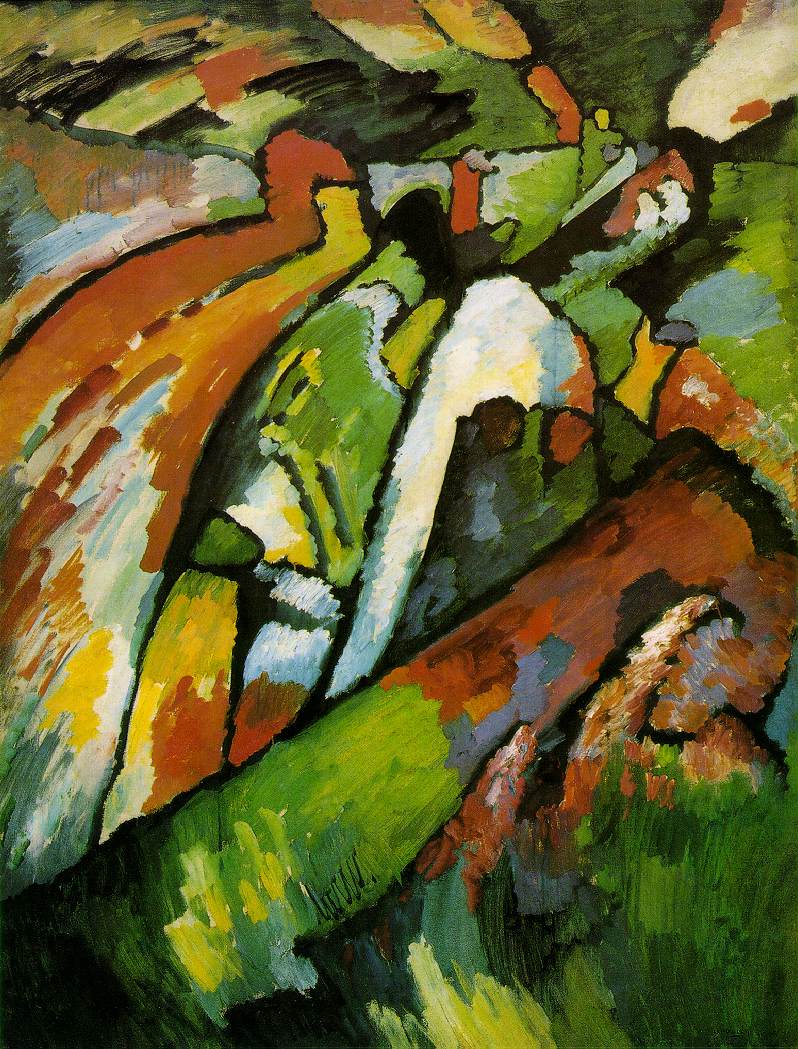

You do not need sonata form to write great music.
And all this time I've been going around saying how Palestrina was an idiot.
Piano sound is a mysterious business, and Mr. Lupu manages to sit at one end of this sizable hall and fill it with color and clarity. There is no sense that he is trying hard to do so; it simply happens. If these two composers speak in different voices, they were unified here by Mr. Lupu’s tender respect for what the written score in each case was asking him to do.
Well put, sir. Also, I respect how you respect Mr. Lupu's respect for the score.The end of the article is a description of the music using vague adjectives, the sort that my co-blogger Empiricus loves to deride. I won't bother right now. What? I should? Oh, okay, but just one thing.
The glory of the sonata is its slow movement: a long, nostalgic sigh, but one that thrives only if Schubert’s written admonition not to dawdle is observed. Its brief opening phrase occupies a harmonic world of vast and sudden change, offering modulations filled with delight and surprise.
That sounds great! I love the harmonic ambiguity of Romantic music. Delight and surprise are outstanding qualities of this kind of music.
Wait, what's that, Mr. Holland? You have a technical explanation? Outstanding! I love analysis. Are you going to describe how these surprising modulations are achieved? Oh, you'll probably only describe one of them in any detail; you wouldn't want to ostracize your less technically-minded readers. Okay, that's fair.
How Schubert arrives at one place from another with the flick of a raised or lowered tone can be analyzed, but no one else seems to have been able to do it.
Uh, I am pretty sure that's patently false. Oh, wait, you're a critic. Analysis tells us nothing! How dare those intellectual elites tell us how music works?! I just feel it, okay?! Analysis tells us nothing. NOTHING! [yelling, shakes fist at sky, looks vainly for god, head explodes]
To reiterate, in closing:
no one else seems to have been able to do it.
Citation needed?-