Making an analogy, or even a direct comparison, can be an illuminating device when talking about abstract concepts. Of course, some people use them in place of an actual point, but Richard Nilsen has a point...just not a good comparison.
Symphony review: Singer Addis punks out on Mahler songs
Richard Nilsen, Arizona Republic, Apr. 22, 2011
“Punks out”?
…
Okay, how did Addis punk out on Mahler?
Phillip Addis wasn't no Sinatra.
Wait. Phillip Addis was not no Sinatra?
So… Phillip Addis is Sinatra?
The baritone sang Gustav Mahler's "Songs of a Wayfarer" with the Phoenix Symphony this week…
Wait…the singer who's not no Sinatra sang Mahler?
How’d he do?
…and the performance was a major letdown.
Well, Sinatra wasn’t known for his Mahler performances.
Sometimes you wait a whole season for a particular concert, because the music scheduled isn't merely beautiful or entertaining, but promises emotional transport.
I wish I had something clever to say here, but really, this is something unique that a symphony orchestra has the power to do but so rarely does. And this seems especially true since they rely so consistently upon the same pieces that have already emotionally transported me many times before.
After all, that is why we who love classical music persist in a love for a dying art form: It can take us out of ourselves and leave us feeling the radiance of the universe.
The art form isn’t dying, it’s just that people always insist on performing pieces that people already know they love.
The classical music universe is definitely not expanding the way most orchestras program.
It is almost a drug and we crave it.
Exactly. But we digress.
So, I’m assuming you love the Mahler “Songs of a Wayfarer” and you wished Sinatra were singing them? …
And when something like the Mahler sits there on the calendar all year, beckoning us to wait for its April date, we hope once again for that emotional and spiritual fix.
Oh, come on, Mahler’s on the calendar every year. But, I guess I know what you mean.
Well, perhaps you can expect too much.
If you expected Sinatra to sing your Mahler, perhaps you did expect too much.
It wasn't that Addis sang badly.
Oh. Was his diction good?
Certainly his diction was good.
Good. Music is all about diction.
As if music were about diction.
Wait? Music’s not about diction?
But the Sinatra comparison is dead on:…
Are you sure, because I can’t even begin to imagine why you’d compare this singer to Sinatra.
…When you heard Frank Sinatra sing, you knew - or felt you knew - that he had lived every word of the song he sang.
And there’s never been a classical singer who you felt this about before? Perhaps even someone who has sang the Mahler before?
The emotional intelligence he brought to lyrics meant that even as his voice declined, his ability to put across a song never wavered.
Exactly. Like when he sang:
Come fly with me, let's float down to Peru
In llama land there's a one-man band
And he'll toot his flute for you
I totally feel like he’s been to Peru, in a way no other artist could.
And the emotional content in lyrics like:
She'll have no crap games with sharpies and frauds
And she won't go to Harlem in Lincolns or Fords
And she won't dish the dirt with the rest of the broads
That's why the lady is a tramp
When he sang that, I could feel that this woman really eschewed the cultured, high-society conventions of her day...like not driving domestic automobiles.
It was what was missing from Addis' performance: He never convinced us - never even tried to convince us - that the words actually mean anything.
This seems fair. But did you really need Sinatra to make this point?
The styles of singing (and the songs themselves) really don't have a lot in common.
He sang as if he had memorized the words, not internalized them. It is at such times that you realize that mere musicality isn't enough: Great art isn't about pretty.
Couldn’t agree with this more… Wait, are you saying Sinatra wasn’t a good singer?
[snip]
But you're making what I would a consider a valid and important observation about the performance...are you sure there isn't a more apt comparison you could provide to help us understand your argument?
If you have ever heard Dietrich Fischer-Dieskau sing these songs, you know how far we have fallen.
Thank you.
See, I don’t know that recording, but this seems like a much better comparison. You've now created a workable reference point for people who know the Mahler songs. Plus, I’m actually likely to seek out this recording to understand better your frame of reference.
Maybe it's just me, but I find this far more illustrative.
5/13/11
Friday Quickie: Comparison wasn't not apt
5/13/10
Music Critics' Grudge Match: Kosman v. Scheinin
"I thoroughly disapprove of duels. If a man should challenge me, I would take him kindly and forgivingly by the hand and lead him to a quiet place and kill him." -- Mark Twain
Every so often it's interesting to see how two different critics review the same concert, same performance.
Today we have Richard Scheinin, of the San Jose Mercury News, and the urbane Joshua Kosman, of the San Francisco Chronicle, reviewing the visiting Los Angeles Philharmonic and the insatiable bunch of energy that is Gustavo Dudamel.
So guys, tell me about the concert.
Music review: Gustavo Dudamel bewilders (Joshua Kosman)
First of all, I love this title. It's just so emphatic, yet open-ended.
 figure dudamel: Not just a great conductor, he's also a snappy dresser.
It's been less than a year since the 29-year-old Venezuelan wunderkind Gustavo Dudamel took the reins as music director of the Los Angeles Philharmonic. How's that working out so far?
Interesting question. I'm going to say...splendidly?
Anyone hoping for a definitive answer to that question from this week's concerts in Davies Symphony Hall - and, yes, that includes me - would have come away perplexed.
Ooh...so close. Sounds like the concert left you with a few question marks after Dudamel's performance.
Dudamel and his band offered up a head-spinning mass of puzzlements.
Oh, Joshua...you and your sprightly word play. But the Los Angeles Philharmonic is an orchestra. Orchestra.
 figure puzzlements: The concert starts at 8.
Anything to add Mr. Scheinin?
Review: Dudamel and the L.A. Philharmonic deliver a dynamic double bill in Davies Hall (Richard Scheinin)
Gustavo Dudamel is the hottest commodity in classical music — in decades. Yet the 29 year-old conductor isn't a physically imposing figure on the podium. He is short. He is chunky.
Unlike Esa-Pekka who looked like he might rip your arms off at any moment.
 figure esa-pekka: A fun day at the beach.
Appearing at Davies Symphony Hall on Monday for the first of two concerts that have been sold out for six months, he didn't look as youthful and bright-eyed as he did on his last visit, two years ago.
So, 8 months with the LA Phil have aged him horribly?
But, whatever, just hand that man a baton.
Great. Good introductions. What's on the concert?
Monday's program - combining John Adams' new California tone poem "City Noir" with Mahler's First Symphony - was a replay of Dudamel's opening night at home back in October.
Sounds like a dandy concert...
Dudamel led his orchestra through works by John Adams and Gustav Mahler,...
Yeah, I know, Kosman just said that.
...repeatedly blowing the lid off classical music niceties.
Take that classical music establishment! Dudamel isn't going to take any of your guff!
How exactly did he do that again?
But anyway, in general, how did Dudamel and the orchestra perform?
In his best moments — and there were many — Dudamel literally seemed to be painting in sound or scraping away surface refinements to expose the raw nerves within the scores.
That sounds painful.
Also, literally?
It got giddy, ravishingly ethereal, rock-band frenzied.
Giddy and rock-band frenzied? A rare combo, but yeah! Rock on, Dudamel!
[I know you can't see it, but I'm do air guitar right now.]
It wasn't perfect. The horns weren't spot-on, and the young conductor — just a few years removed from his career's take-off in Venezuela — sometimes pushed the strings so hard that a richness of sound was sacrificed. But I don't think Dudamel is going for perfection,...
Perfection is vastly overrated.
...or certainly not only for perfection. He seems to sense a composer's original or true intention...
Which are in conflict with perfection? God...just like a conductor to sacrifice the music for the sake of the composer.
...and has both intellect and intuition to retrieve it, concentrating energy through his gestures, willing his players toward his vision of the music.
In any case, sounds like an exhilarating performance. How about it, Mr. Kosman? Exhilarating, yet not perfect for perfection's sake?
There were readings marked by phenomenal power and inventiveness,...
This sounds exhilarating.
...and others dragged down into a morass of ostentatious mannerism.
And this not so much.
"Morass of ostentatious mannerism." Frankly, that sounds like one of Dante's circles of hell.
At times Dudamel and the orchestra seemed utterly in sync, only to turn the page and come to grief on a simple question of ensemble or instrumental balance.
Yeah, Mr. Scheinin sort of hinted at this...but, you know, Dudamel chose instead to focus on the "composer's" intent. Pssh.
The orchestra itself struggled in parts (the brass was particularly unpredictable)...
Ding, ding, ding! I think we have a match.
...while excelling elsewhere (especially the strings).
Apparently you like your strings without a rich sound. It's okay...me, too.
So, it seems like you're both approaching this concert with different expectations. Scheinin wants his socks knocked off, and Kosman wants to know if the LA Phil and Dudamel can thrive after the new car smell wears off.
Both perfectly valid approaches. So, let's talk about the music. Of course we'll skip the Adams "City Noir" since no one cares about new music anyway.
How about the Mahler?
Dudamel seemed so intent on blazing his own individual path that he often left logic and rhetorical directness behind.
Again, I can only blame his desire to follow the composer's intention.
In particular, his tendency to push and pull at the tempo, and his fondness for long silences, often interrupted the musical flow.
Those quirks were most apparent in the Mahler, a performance for which "unorthodox" would be a severe understatement.
Well, that's just how we roll here in the States. Sounds like he's been reading up on becoming a "real" 'Merican.
 figure unorthodox: To best serve the LA Phil, Dudamel decides to step down as their conductor.
So, his Mahler was pretty fucked up, huh? Cool.
Let's talk first movment.
In the long first movement of Mahler's Symphony No. 1 in D major, nicknamed "Titan," Dudamel took his time, stretching slow tempos and gauzy textures to the breaking point, almost losing the thread.
Interesting. It sounds like you and Mr. Kosman were picking up on some of the same things in this movement. So, the first movement, was a bit of a mess?
He was that confident — taking risks, poking around, waiting for his point of entry to show itself and then going for it with his players: Boom!
Or not...I guess you like your Mahler fucked up. Me too!
How 'bout Debbie Downer over here?
I was intrigued, if not wholly convinced, by his maverick approach to the main theme of the first movement, replacing the usual hiking tread with a lighter-than-air fairy ballet.
So, it's not all bad. Tempos were crazy, but they seemed to have added some interesting twists to a very famous opening movement.
 figure maverick: Come on, Gus, do some of that conducting shit!
And the second movement?
Mahler's Scherzo...
[Quick and pointless aside: I've always thought calling this movement a scherzo is a misnomer. It seems to me to be much more related to earlier symphonic minuet movements than to the scherzo (although, that can be a fine line), especially seeing that the main theme of the movement is an actual 3/4 dance. Just saying.]
...began with wildly ripping and playfully galumphing cellos. One of the front-line players kept trying to tamp down a delighted grin as Dudamel — recovering from a pulled neck muscle, sustained while conducting at Disney last week — stepped back and nudged things along with a little shoulder dance.
Playful, delightful and worthy of a "little shoulder dance". Sound like the second movement I grew up with.
In the second movement, Dudamel replaced the music's jaunty, somewhat rustic, rhythms with fierce stompings out of a monster movie....
"Little shoulder dance" and "fierce stompings out of a monster movie." That's basically the same thing.
What else?
...[I]n the third movement, he thumbed his nose at Mahler's tempo marking ("without dragging").
Short and sweet. But I'm beginning to sense that you're not a fan of this interpretation. It's subtle...but I think it's there.
The third movement, built around a minor-keyed "Frere Jacques," cast an enchanted haze of doom, but also captured the garish boom-chick of a rural klezmer band.
I do think it was Mahler's marking of "without dragging" that always kept this piece from having that dreaded "haze of doom". So, I think you guys are still basically in agreement.
The finale to the concert — part of the San Francisco Symphony's Great Performers Series — began with crashing outbursts, beautifully corrosive, with tempos dramatically slowing and the volume drawing down to whispers. Dudamel gathered them back up into a swarm, more than once, and the performance grew frenetic, even savage, exposing the raging nobility of Mahler's score in a way that's not often heard. Gustavo really gets Gustav.
So despite some earlier reservations and quirky interpretations from the maestro, it seems we had a great show! Who would have doubted?
Sum it up for us, Mr. Kosman.
[T]he finale was a mess: loud, shapeless and overbearing.
Exactly.
----------------------------
Both are very nice articles, and should be read in their entirety for the exact context of their comments. But I do find it interesting to see how differently two well-informed critics can review the same concert. Of course, they have their unique styles. Kosman with his "head-spinning mass of puzzlements", and Scheinin and his unbridled enthusiasm: Boom!
12/18/09
Migh Gud Tidel
Coming up with titles is like waiting in a long line for the restroom: you have to go—immediately!—but there’s no relief in sight. So, embarrassingly, you’re forced to...
From Mozart to Mahler, it was a bounteous year for classical recordings
...you’re forced to favor alliteration over accuracy.
Now, it’s not a horrible title, as these things go. We’ve seen much worse, especially atop year-end, top-ten type articles like this. But give it a gander once more and think about what it means to go from Mozart to Mahler.
Is the title suggesting that the music chronologically ranges from Mozart (b.1756) to Mahler (b.1860)? No. That would be silly; it’s only 104 years. Even if we expand the range by using Mahler’s death year (1911), that leaves only a 155 year window. I hardly expect experienced critic John von Rhein to be so narrow. If that’s not it, then what is?
Perhaps the title suggests that all the composers fall within the alphabetical space, between Mahler and Mozart? Hmm. There are some big M-boppers:
Marin Marais
Frank Martin
Bohuslav Martinu
Jules Massenet
Felix Mendelssohn
Gian Carlo Menotti
Olivier Messiaen
Giacomo Meyerbeer
Darius Milhaud
Claudio Monteverdi
That’s still pretty silly, a top ten list with music by composers whose last names begin Ma-Mo. That can’t be it. Is it a stylistic thing? Seems unlikely.
I know! Let’s go to the text for answers.
1 Mahler: "Symphony No. 9." Royal Stockholm Philharmonic Orchestra, Alan Gilbert, conductor (BIS). : With Gilbert at the helm, the New York Philharmonic could be in for an exciting new era. His final concerts as chief conductor of the Stockholm orchestra inspired a studio recording of Mahler's sublime valedictory that strikes a wonderful balance between desolation and acceptance, with luminous sonics to match.
2 Mozart...
Or perhaps the editor didn’t bother to read about the other eight recordings?
-
10/6/09
Thank Aequitas for Joshua Kosman...
So, it's been a bit of dry spell for truly awful concert reviews. So in place of the traditional offending critiques, let me say, "Thank god for critics like Joshua Kosman," and offer up a gem of a review.
Read below as Kosman does (in a relatively short review, mind you) what so few before him seem able to accomplish. He's able to both review the performance he's just heard and, most importantly, add to our understanding by offering an intellectual and helpful analysis of the music on the concert.
Now here's the kicker -- there are two works on the concert: one a venerable classic of the literature full of famous solos and memorable melodies, the other, written by one of those Europeans that no one has ever heard of outside of the crusty old halls of academia. Your average reviewer would just write up a blow-job of a critique of said venerable classic (and probably to MTT while he's at it), only mentioning in passing the strange foreign work which really should have been a Mozart piano concerto anyway.
S.F. Symphony's placid Mahler
The arcane and alluring music of Giacinto Scelsi...
I'm guessing the title isn't yours...
The arcane and alluring music of Giacinto Scelsi is always a welcome presence in Davies Symphony Hall, and "Hymnos," a piece of splendidly orchestrated monomania that had its first San Francisco Symphony performance Wednesday night, is no exception.
Monomania: a psychosis characterized by thoughts confined to one idea or group of ideas.
Cool. Scelsi's crazy -- I knew it. (AnthonyS, you owe me ten bucks.)
 figure Giacinto: I'd say this guy looks a little monomaniacal. I'm actually worried he might eat my baby.
I like your suggestion that he's probably a bit crazy.
But the best part of this introduction is that it introduces you to Scelsi's music. Not his biography, or some inane personal anecdote used to establish some analogy and contrivance that will explain the entire evening's programming, but his music -- you know that stuff that comes from the direction of the stage.
On this occasion, Michael Tilson Thomas paired "Hymnos" with Mahler's Fifth Symphony, serving it up as an appetizer during the third and final week of the Symphony's Mahler Festival. The piece came off as something of an oddity - although I doubt there are any circumstances under which it wouldn't.
Like many works by this elusive Italian visionary, who died in 1988, "Hymnos" fixates on a single pitch and works as many variations on it as possible over a 13-minute span. To listen attentively to one note, proclaimed in different registers and in a dazzling array of instrumental guises, is the key to Scelsi's vision, a gloss on William Blake's "world in a grain of sand."
Look at him go. Intelligent and informative, not to mention a pertinent elaboration of your observation that the piece is an "obsessive exploration of a single pitch".
But wait, there's more!
But there's more than that going on in "Hymnos," which uses two orchestras and a central organ (Jonathan Dimmock was the soloist) to create various spatial effects. The sheer range of moods Scelsi creates - now craggy and grandiose, now faint and filigreed - helps guide a listener through this journey.
"Helps guide a listener," sounds suspiciously like an argument. 'How so?,' he asked not expecting an answer.
And by establishing a home note so forcefully, Scelsi makes possible a kind of elemental musical drama, in which the listener hears any move away from the pitch as a wrenching dislocation, and a return as welcome relief.
This is a music review isn't it? All this thoughtful, enlightening analysis, and you are talking about new music, right?
Surely, you'll make some sort of judgmental wisecrack about the complexity or harsh sounds of modern music. Maybe make the analogy about the cold, indifferent technologically advanced culture and contemporary music.
The result is a sort of caveman version...
or you could call it a caveman...
The result is a sort of caveman version of the processes of tonal music, bearing the same relation to Mahler that the barter system does to credit derivatives.
How topical. Just the analogy I was looking for.
Or in pictures, you could make the analogy that as caveman, we have:
 figure 1: Caveman Scelsi (with beautiful cartoon chick), and...
 figure 2: Unfrozen Caveman Mahler -- "I'm just a caveman. I fell on some ice and was later thawed by some of your scientists. Your world frightens and confuses me! But there is one thing I do know -- It is improper, to expressly pursue the Urlinie in performance and to single out its tones...for the purpose of communicating the Urlinie to the listener."
Also, hear the work in question below (and look at strange pictures of rocks while you're at it). It's a beautiful and intense piece of music, and only elucidate the thoughtfulness of Mr. Kosman's comments.
By the way, Mr. Kosman, do you realize that you just spent your first six paragraphs on Scelsi?! Surely it's time to masturbate over the supreme awesomeness that is Mahler 5...
Improbably enough, "Hymnos" turned out to be more dramatic than the Mahler, which received an uncharacteristically languid and unfocused performance from Thomas and the orchestra.
This is improbable. How many hours of rehearsal did the Mahler get? and how many do you think the Scelsi received?
The first two movements in particular - once past Mark Inouye's dynamic opening trumpet blast, which promised great things - sounded wan and reserved, marked by slow tempos and a deliberative approach to phrasing. At times this paid off, especially in clarifying some of the counterpoint in the first movement, but mostly the effect was dramatically lax.
This is indeed a difficult balance to strike between clarity and emotional vitality. However, personally, I think this is more the fault of the music -- just my own blasphemous opinion of course.
Things improved in the scherzo, ably led by the horn section, and the famous Adagietto, which Thomas paced nimbly enough to keep the melody from sagging, cast its gorgeous spell. But by the time the finale rolled around, blurriness and uncertainty were again the order of the day.
Wonderful review, Mr. Kosman! But only two paragraphs for the Mahler? Surely you will burn in hell.
And let me quickly quote from the one person who commented online about Kosman's piece:
Regarding the Scelsi-while you might call it "interesting, it is not beautiful or even pleasant to listen to...really, what is the point of this piece? Nearly a whole page in this review devoted to it and only a couple of sentences devoted to Mahler?? Makes no sense to me. Wrong priority in my opinion.
Yeah, Mr. Kosman, what is the point of this piece? Clearly, it had no point, so why discuss it. I mean there was Mahler on the concert for fuck's sake!
Also, would you mind closing those quotation marks? And what the hell are you quoting? Kosman didn't use either the word interesting or beautiful "or even pleasant". He loves his vocabulary much too much (filigreed indeed).
Densj, your opinion is stupid and wrong.
(I think that should fulfill my snark quotient for the week.)
9/4/09
"Galaxy nearly destroyed," says local scientist...
"...The encounter could create a time paradox, the results of which could cause a chain reaction that would unravel the very fabric of the space time continuum, and destroy the entire universe! Granted, that's a worse case scenario. The destruction might in fact be very localized, limited to merely our own galaxy."
Doc Brown, Hill Valley, 2015
So, John Daly-Peoples, of the National Business Review, writes a preview of the performance of Mahler's Sixth Symphony by the Auckland Philharmonia.
 figure 1: A different John Daly playing a little shirtless golf. Not fun to look at.
MAHLER'S TRAGIC TALE
This week the Auckland Philharmonia will be playing one of the first and probably the greatest autobiographical symphony of the twentieth century with Gustav Mahler’s sixth symphony.
Autobiographical symphony? Okay, I guess. Premiered in 1906, and sometimes know by the editorial title "Tragic Symphony", many historians, and even Mahler's wife have made overtures of the autobiographical meanings in the work.
However, Mahler was seemingly at a happy point in his life, having recently married Alma Schindler and enjoyed the birth of a baby daughter during the composition of the piece...but hey, I didn't know the guy, perhaps it was inner torment.
But I digress...
Beethoven’s great symphonies portray mankind in a heroic manner. He attempted to show man in pursuit of higher aims but they were figures of almost mythic proportions.
I guess it is true that you can't write about Mahler without mentioning Beethoven...
Mahler on the other hand puts himself at the centre of the music with the music expressing his own fears, emotions and aspirations.
Like the contemporary thinkers such as Sigmund Freud he was endeavoring to find the universal truths from within the individual.
Composed in the early years of the twentieth century the sixth symphony...
wait for it...
Composed in the early years of the twentieth century the sixth symphony presages the tumultuous world evenmts [sic] to come.
The symphony does what now? Presages? So it's not just autobiographical, it's a fortune teller?
 figure B: Who knew?
Is Mahler not aware that having knowledge of the future could possibly screw up the space-time Continuum and endanger his own existence?
 figure trois: "Marvin, you gotta play. See that's where they kiss for the first time on the dance floor. And if there's no music, they can't dance. If they can't dance, they can't kiss. If they can't kiss they can't fall in love, and I'm history. "
And oh, "evenmts"?
It also prefigures the calamities which would afflict the composer; the death of his daughter, his loss of prestige in being dumped from the Vienna Sate Opera and his being diagnosed with a terminal heart condition.
Damn. I wonder how his fate would have been different if he had just added more cowbell?
Are we not at least a little surprised that Mahler had supernatural powers? Is this common knowledge -- Mahler gazed into the future and wrote a symphony about what he saw?
Guess so. Although, to be fair, in the original program notes Mahler added this little anecdote that may illuminate his omens of doom in the work:
"Last night, Darth Vader came down from planet Vulcan and told me that if I didn't take Lorraine out that he'd melt my brain."
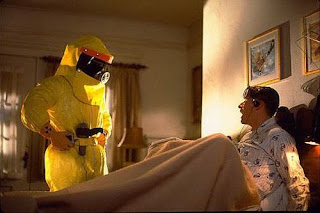 figure 4: Darth Vader presages tumultuous world events to Mahler.
----------------------
From now on, when writing and thinking intellectually about music, can we agree to seek out rational explanations for the underlying story behind a piece of music rather than to attribute mystical powers? Thanks.6/10/09
One-Hour Crash Course in Music History
This article is about Mahler. Gustav Mahler. Kyle MacMillan, Denver Post, Mahler Symphony Electrifies Mahler, right? Mahler. Got it. Beethoven... The first word in this article about Mahler is...Beethoven. Beethoven, of course, is the first and last word in music history. There was music B.B. (Before Beethoven), then Beethoven, then music After Beethoven (A.B.). The date 1 A.B. is commonly set at 1805, when his Symphony No. 3 was premiered on April 5th. Specifically, it was the C# in measure 7 of the first movement that ushered in the common era from which time is judged today. Any musicologist will tell you that. That's common knowledge, though, and I don't mean to sound pedantic; in these days (204 A.B.) that hardly needs explaining. What does need explaining, though, is Mahler. What's the deal with this Mahler fellow anyway, and how does he relate to Beethoven? Beethoven reinvented the symphonic form, transforming it into a journey of heroism and redemption and investing it with new depth and meaning. It is also commonly known that music before Beethoven was just a bunch of melodies and stuff. Beethoven changed all of that by investing music with emotion and meaning for the first time. Never before had the motion of tones through musical space been regarded as somehow reflective of the inner thoughts of the composer. Thus, also in 1 A.B. were born the twins radical subjectivity and hopeless anthropomorphism. At the end of the 19th century, Gustav Mahler seized on his predecessor's vision and pushed it to its fullest possible expression, creating works that stand as some of the greatest achievements in the form. Born in 55 A.B., Mahler was heavily influenced by Beethoven's idea of making music seem profound. I think you mean "2008-09 SEASON!!1!1". Because of the length of this five-movement work — 80 minutes — and the supplementary forces it requires, including chorus and two vocal soloists, it is infrequently heard. Yeah, except for the part where it's not infrequently heard. Last season (203-204 A.B.) it was played by "major" [a quibble for another time] symphonies in New York, Cincinnati, and Houston, by diverse international powerhouses like Halle, and smaller cities like Petersboro, England, and La Jolla, California. To name a few. (It's also been recorded a few times.) Sorry about the linkfest, but it's really, really not infrequently heard, at all. This paucity combined with the work's exceptional power make any performance an anticipated event and a precious one, when it receives the kind of masterful treatment it did Friday. That's fair enough, as is the balance of the review (which can be found via the [first] link above). But the insinuations that a) this is somehow all contingent on Beethoven, and b) that the performance was special specifically because it's seldom performed, are silly. Some fussy Mahler die-hards no doubt found something to quibble over — a tempo that was too slow or fast or whatever — but most listeners no doubt agreed that it was an electrifying, deeply moving experience. The "fussy Mahler die-hards" constitute a classic straw man construction, and are admittedly imaginary. Equally apocryphal, and in a parallel construction, are the "most listeners" who "no doubt agreed" that the imaginary "die-hards" were full of shit. What? The imaginary purists' (die-hards'?) imagined complaints were trumped by the imaginary every-listeners' imaginary contentions that the music was electrifying and moving. Oh. Thankfully, this is all in the A.B. era, because music written B.B. was never moving, heroic, or redemptive. Here is the rest of the review, which seems perfectly cromulent by itself: Kahane invested this epic work with deep musical understanding and a razor-sharp sense of drama, bringing incisive definition to its constant shifts in sound and mood, from sweeping gestures and grand exclamations to moments of quiet vulnerability and wonder. The well-matched vocal soloists were both first rate, but special kudos go to mezzo-soprano Sasha Cooke, who highlighted the third movement with her affecting simplicity of expression.The final movement possessed all the redemptive force and musical thunder it should, with Cooke and soprano Janice Chandler Eteme nicely meshing, and the CSO Chorus deftly building from a hushed opening to a thunderous climax. This milestone evening ranks among the finest moments of Kahane's tenure, and it served as a reminder of how difficult it will be to bid farewell to him as music director at the end of 2009-10. That all seems perfectly reasonable, well-reviewed, and about a good performance to boot. Why, then, the speculative and Beethoven-framed introduction? It seems like a bizarre supplement to the review proper, and that supplement implies a lack (but that seems beyond the scope of this afternoon's project).
He was a composer, and is fairly well-known today. Sometimes, major orchestras even program some of his symphonies.
 Among them is the composer's Symphony No. 2 in C minor, "Resurrection," which conductor Jeffrey Kahane and the Colorado Symphony presented Friday evening, putting an exclamation point on the ensemble's 2008-09 season.
Derrida, trying to think about Mahler as that which is naturally prior to Beethoven.
It is, after all, going to be 205 A.B. before we know it.
3/14/09
Fast Eddie on Effective Symphonic Programming in a Tough Economy
The following is an excerpt from an interview with renowned critic-scholar Fast Eddie at an undisclosed location.
-
[Empiricus] Some say the symphonic organizations are being hit very hard by this econom...
[Fast Eddie] Yeah, yeah. The economy this and the economy that, profit margins, season ticket subscriptions, local business donations, dwindling audiences, dying patrons, and on and on...
You knows what? I got your problems fixed, sure as folded pizza. If ya listen to what I gotta say, you’ll make all the moolah you can eat. Ready?
First, that’ll be five bucks. [At this point Empiricus asks for change for a twenty-dollar bill. Fast Eddie waives his fee]
Okay. Bottom line, what cha gotta do is this—really simple: Ya gotta have fait[h] that the customer is always right. Don’t try to be smart—that’s for those Ivy League know-it-alls who’ve got nothin betta t’do than analyze stuff all day. If ya simply give ‘em what they ask for, and not what you think they might want, then you’re on your way to cabbage heaven. Stick to whacha know’ll work, the warhorses. Your 70-somethin customers’ll love ya. Just don’t surprise ‘em; the more surprisin you are, the worse odds you’re getting on your dough.
One catch: Ya gotta lower your overhead, see. Instead of a 100 person orchestra, how ‘bout a 50 person orchestra? Presto! That way you don’t have to give ‘em the world, just what you can afford. The suckers’ll lap it up. Sure, they’ll miss the Mahler, the Berlioz, the Strauss, for a while. But they’ll still love ya for the Mozart and ya don’t have to lower the prices, see.
[Empiricus] But there’ll be those who say that Mahler is a core part of the repertoire. Can we really set it aside, like you propose?
[Fast Eddie] Listen, this economy bull-puckey is just a self-correction. Got it? We were livin beyond our means. That goes for symphonies, too. I mean, look at the whole shebang: three-thousand seats, statues, gold railings, thirty ushers, guest solists, commissions, what have ya. And all for a puny two hours of 50 string players waiving horse hair across cat gut? Holy friggin cannoli, ya got 180 people on the payroll, right. How much does that cost? Way too much. Ya just can’t keep it goin. That’s like Imelda Marcos and shoes. If ya cut half the shoes out of the picture, bingo, you make more than you spend!
[Empiricus] I see. Has anyone taken your advice, Mr. Eddie?
[Fast Eddie] Glad you asked. The Fort Worth Symphony Orchestra recently purchased my patented advice; they even got a 20 percent discount, being they’re the first and all—I need t’get my brand out there, see.
Bang, they were going about their plan, throwing greenbacks at three Mahler Symphonies per season, right. Well, they took my award-winning wisdom and now they’re playin a bunch of Beethoven instead. Win-win, badda-bing.
They even got Scott Cantrell to hype it up as if nothin strange was happenin.
Instead of the planned performances of Mahler's Third, Fourth and Eighth symphonies, the FWSO will offer the ultimate in core repertory: Beethoven.
“Ultimate”: now that’s a winnin salesman!
The FWSO didn’t change the concert’s title, too.
The "Great Performances Festival," Aug. 28-30, will include Beethoven's Third, Fifth and Sixth symphonies, the first two piano concertos and the Violin Concerto.
They’re gonna play the safest—and most profitable—music in the encyclopedia.
Beethoven's Ninth Symphony will be performed during the FWSO's 2009-10 symphonic series...
But most strategic of all, they’re listenin to the suckers.
Most other programs include at least one work chosen by patrons in an audience survey.
Sure, they got some work to do still.
[Another] program will include the world premiere of a work by Peruvian composer Jimmy López. Jennifer Higdon, the orchestra's 2009-10 composer-in-residence, will be represented by four works on two different programs.
Guest conductors will be baroque-music specialist Nicholas McGegan, for music of Vivaldi, Haydn and Mozart; Giancarlo Guerrero, music director of the Nashville Symphony; and Mei-Ann Chen, assistant conductor of the Atlanta Symphony.
Soloists will include pianist Horacio Gutiérrez and violinists Midori, Sarah Chang and Jennifer Koh.
But there’s still time to cut more spending.
-
11/9/08
E-Flat Clarinets Are...What?
This odd bit comes from Anna Picard of the British Sunday Independent, reviewing this year's Proms. Can anyone enlighten the DR about the veracity of this bizarre claim?
I've never bought the notion put about by Alma Mahler
that the three "hammer blows of fate" in the finale of the Sixth foretold the death of four-year-old Maria Mahler, the anti-semitic putsch at the Vienna Staatsoper and the diagnosis of the heart condition that would kill Mahler at the age of 51.
Me, neither. I guess I bought into the conventional wisdom that they signified the death blows of the nebulous "hero" of the symphony. But I could be wrong; meaning in music is, indeed, nebulous.
(The shriek of anti-Semitism is in any case a near-constant in his symphonies, present in each mocking call of the E flat clarinet.)
What? That...is truly...Jews hate E-flat clarinets? Or: anti-Semites hate them? What is the symbolism, or metaphor at work here? Is this some well-known musicological meme of which I'm just not aware? Anyone?
But the struggle depicted in the music must have a neurotic dimension if it is to be more than a panoramic slide-show of the Austrian Alps, with cow bells.
I don't know what that means, either. But it's not as off-putting as the equating-instrument-with-anti-Semitism thing.
A little help?
(h/t again to anzu)
9/28/08
Wha? Wha? What?
Part I
This week's performances of the biggest symphony Mahler ever wrote are being "dedicated to the many thousands of people who contributed to both the creation of Benaroya Hall and its monumental impact on our great city," according to the program.
They’re clever up there in Seattle, you know. Mahler’s Eighth Symphony is known as the “Symphony of a Thousand.” Tee-hee.
Thursday's subscription season opener was, in those terms, a triumph.
Wha? “In those terms?” What terms? From what I remember about the word “triumph,” it means, roughly, this: a great victory or achievement. So then, the season opener achieved...a big symphony? A dedication? Or was it more of a victory, instead? The season opener was victorious over...not having a season opener? Wha?
-
Part II
It was hard to know which to admire more: Mahler's skill in creating an edifice of sound at once massive and lucid, or music director Gerard Schwarz's in realizing both the massiveness and the lucidity.
I once had this question in the quantitative section of the GREs, so I know how hard it is, too.
But either way, the result was a ringing endorsement of the hall's acoustic excellence.
Wha? So let me get this right: The resultant performance, one which was a combination of Mahler’s compositional skill and Schwarz’s conducting skill, endorsed (????) the awesome acoustics of the hall? The performance endorsed the acoustics. Wha?
-
Part III
Schwarz has recently been bringing Mahler's bigger symphonies before the public at the rate of one a season — since 2006, the Third, the Seventh and the Sixth.
And now the Eighth. That’s forty percent of the total number of Mahler’s symphonies, that is if you want to count the Tenth, too. But really, how many more “bigger” ones does he have? I can’t wait ‘till Schwarz starts doing the smaller ones.
The vividness of the composer's inspiration has benefitted, on each occasion, from the conductor's equally vivid sympathy for the expressive fervor of the music and his ability to shape its often wildly varied elements into a coherent whole.
Wha? Huh? (plucks eyebrows, draws new ones with magenta Sharpie to suggest confusion) I think we’ve got it already—Schwarz did a good job with his baton. But...”the vividness of the composer’s inspiration benefited?” As I see it (and I could be wrong, of course), Bernard Jacobson of the Seattle Times is equating “inspiration” with the “score,” however convoluted that may be. In that sense, Schwarz, being able to read and perform the score, made the score “coherent,” which, in turn, benefited the score’s vivdness, which isn’t inherently coherent (maybe). Wha?
-
Part IV
The Eighth — known as the "Symphony of a Thousand" — poses a different structural problem.
...aside from not being inherently coherent, which befogged the vividness of the composer’s “inspiration.”
Its two movements are settings respectively of the ninth-century Latin hymn "Veni, Creator Spiritus" and the final scene of Goethe's "Faust." Mahler succeeded brilliantly in unifying his treatment of these two vastly different texts, but at the cost of variety. The seven-note figure that dominates the hourlong second movement is exploited far more repetitively than its potential justifies.
Here’s my best Bernard Jacobson impersonation: “Mahler had no idea what he was doing. He should have done it this way, instead, because I know better.”
And the method by which Mahler stretches relatively few motifs over his vast canvas is not development so much as permutation:
I’ve got a sinking feeling about this. (Hint: “permutation” sounds cold and mathematicky)
...the first movement's obsessive juggling with a handful of melodic ideas, in particular, reveals where Schoenberg's ultimately mechanistic 12-tone serial technique had its origins.
Wha? Give me fucking break! The one thing that Bernard “Totem Shoes” Jacobson would urge Mahler, himself, to change about the Symphony would be how much it reminded him of Schoenberg’s not-yet-invented technique, which is supposedly “ultimately mechanistic.”
Here’s my second best impersonation ol’ Totem Shoes Jacobson: “Hey Mahler, you shouldn’t have written it that way, because, one, I know better and, two, you might sound like Schoenberg, who I don’t like, because he is all mathematicky and stuff. You want to go get some coffee and type things on some Microsoft software then go hiking for vivid inspiration and not learn anything about modernism or Mahler or Schoenberg or serialism or music? Me, too!”
What?
-
9/11/08
The Most Dangerous Ding Dong
Here’s one of our favorites, David Hurwitz, on a new recording of Mahler’s Fifth Symphony:
Having enjoyed David Zinman's Mahler cycle to date, I came to this release with high expectations. What a disappointment! This is a lame, undercharacterized performance. It has one thing going for it: a nice clarity to the string counterpoint (and this work has lots of it), but this is a purely technical issue since emotional expression seems not to be high on Zinman's list of priorities. The opening funeral march is about as flat-footed as they come. Its two big outbursts don't so much climax as simply fizzle. This "wet noodle" approach positively kills the second movement. Could anyone call the opening "vehement", as Mahler demands, or is it simply neat as a pin? At nearly 19 minutes the scherzo sags badly well before its quiet central section. The adagietto is pretty (when is it not?), and the finale has the most string counterpoint and so bounces along reasonably well; but the final chorale has the weakest brass playing on disc combined with a tempo that starts off too fast but winds up too slow. The ample acoustic further blunts the music's impact.
Positively scathing. But, David’s not done yet!
The most dangerous thing about this whole production is the cover...
Hmmm. Dangerous cover. Hmmm? What could he possibly be talking about? What could possibly be dangerous AND on the cover? I suppose if the cover was laced with arsenic, then it could be dangerous. Or if the cover was fabricated out of used needles, then it could be dangerous.
This just doesn’t make sense, though. He must be talking about an image. So what image could possibly be dangerous?
(possibly the first full-frontal male nude to grace a Mahler symphony album).
Oh. A penis. A ding dong. How stupid of me (slaps forehead with palm).
Figure 1. Paleolithic police sketch artist's rendering of suspect album cover.
-
8/21/08
Wolf! Wolf!
As one might surmise, this is sort of a follow-up to my previous post, Goldilocks—I want to drive the point into the ground even further and, since I’m in the driver’s seat, you’ll just have to sit back and take it.
If you aren’t privy to the original Goldilocks, I suggest you take a gander. But if you’re lazy like me, here’s the synopsis: I try to equate bloated language with crying wolf. It sounds fantastic but loses its effectiveness over time. It’s hyperbole, exaggeration, not real. So, I wonder whether or not this disproportionate language might be the culprit behind the negative perception of classical music. I suggest that it’s really no one’s fault, it’s the language we inherited. And no one is immune: composers, critics, musicologists, theorists, laymen, performers, superheroes, etc. I also give you three kaleidoscopic images and ask you to imagine them joyfully weaving in and out of each other. Great fun.
So here we are a couple of days later and the first thing I randomly come across—just making the daily rounds—is this nice article by Scott Cantrell.
FWSO preps for Mahler symphonies
Sweet. Perfect for demonstrating my point. I think that anything Mahler is already so bloated that we might want to start spelling his name with a few extra letters (Mawhlerr?). Besides, y’all know that everything in Texas is bigger. And bigger is, incontrovertibly, better!
The instrumental forces required for the Second Symphony are truly heroic...
I read that Odysseus once employed seventy lyres just to take a shit. That’s one heroic shit, folks! But tales of truly heroic instrumentations don’t stop there. Achilles wasn’t actually killed by an arrow. Instead, he accidentally choked on four bone flutes. Neil Armstrong refused to leave Earth’s atmosphere without his sixteen euphoniums. The beaches at Normandy were stormed by 150,000 soldiers armed with nothing but oboes and bassoons. And Ethan Allen and Benedict Arnold at Ticonderoga? They lulled the British to sleep by playing 21,000 autoharps. Mawhlerr? Pffft. He used some extra brass and winds for his symphonies.
And this is the first picture that comes up when I Google Image “truly heroic.”
2/24/08
Composer of the Day!
 Today’s composer of the day is Gustav Mahler.
(1860-1911)
The poster child for late romanticism, Mahler wrote relatively few pieces, busy with conducting engagements throughout his career. Among the best known are his nine symphonies, with extensive sketches for a tenth, which has been completed by various people. There are also a number of songs, mostly with orchestral accompaniment.
His music is performed regularly. In fact, it is difficult to find a symphony concert without either Beethoven or Mahler on its program. His place in the musical canon is, perhaps, due to a rich and nearly inexhaustible palate of topics the music seems to conjure up.
Each work, according to Mahler, in their own way represents a kind of autobiography. Lengthy and filled to the brim with evocative musical imagery, the music is said to explore every emotional situation placed from the countryside to the bedside, to inside the head and back again.
This is a typical reaction to his music. Silly isn't it?
He famously once visited Dr. Freud. Mahler not Lenny. Go figure.
You should listen to his music. I do.
-
2/14/08
On Avoirdupois, Practical Urges, Helpful Transcriptions, and More!
You got me,
avoirdupois \av-uhr-duh-POIZ; AV-uhr-duh-poiz\, noun:
1. Avoirdupois weight, a system of weights based on a pound containing 16 ounces or 7,000 grains (453.59 grams).
2. Weight; heaviness; as, a person of much avoirdupois.
(from dictionary.reference.com)
Ok. Avoirdupois. Let’s go!
Why, Beethoven, You’ve Gone Mahlerian
Gustav Mahler’s orchestral transcription of Beethoven’s Opus 95 String Quartet suggests that inside every thin man is a fat one trying to get out.
I…uh, what? It suggests that thin people secretly want to be fat? What?
Such urges for physical change are usually practical ones; artistic advantage tends to be accidental.
The urges…are practical. It is practical to want to be fat? And sometimes…fatness has artistic advantages? I do not understand this opening paragraph. I think I'm getting a headache. But let’s keep reading!
Mahler, as conductor of a big orchestra, wanted the opportunity to have an admired chamber piece for himself.
Mahler wanted to have an admired chamber piece…for himself. So he orchestrated it? For himselve’s orchestra? I think I’m coming down with something. Maybe I secretly want to be fat. Ok, fatter.
The Curtis Institute of Music in
Ah, good. I understood all of this. I’m starting to feel better.
Although the notes stay the same, avoirdupois has a major effect on most music.
It does what? Gets…fatter? More instruments = fatter music, I gather, Orchestrating a piece is metaphorically making it bigger. I see, maybe. And the result is…having an effect? A...major...effect. Oh, no, I’m getting dizzy again.
The results can be instructive, sometimes helpful and sometimes not.
The…effect can be…instructive. But not helpful, except sometimes? To whom? Where’s my Pepto-Bismol?
For rehearsal purposes Stravinsky reduced his “Sacre du Printemps” for two pianists, draining away its color and heft but providing a clarifying X-ray view
Which is, I take it, helpful? Can transcription give me X-ray vision? That’d be awesome!
Dvořák orchestrated his piano four-hand “Slavonic Dances” and did it well.
Which was helpful? Or instructive? Both? So woozy…
The art of transcription’s biggest success story might be Haydn’s “Seven Last Words of Christ.” Using the common marketing strategy of the day, Haydn reduced his orchestra original to a string quartet, providing manageable and salable home entertainment for amateur players. The intimacy discovered may be more compelling than in either the orchestral version or the choral adaptation he also made.
Head…clearing. Sentences are beginning to have meaning again. Okay. Deep breaths. I think I understood this. Haydn’s transcription was helpful to amateur musicians, because they could play music normally relegated to the concert-going experience. Helpful, presumably, to him, too, since he could make extra Deutsch marks, or whatever they had then. But was it instructive? No one will say. Is “compelling intimacy” instructive? Or…helpful?
As played by the dazzling young Curtis musicians, Beethoven-Mahler had the disadvantage of sounding too beautiful.
It…what? Oh, crap, waves of nausea returning… It had the…disadvantage…of sounding too beautiful. It sounded more beautiful than it actually was? Migraines…
Different string sections resonated and echoed with unintended grandness.
Uninteded by whom? The orchestra? Conductor? Beethoven? Mahler? Perhaps I’ll lie down for a little while.
Given the exceptional ability of the ensemble (all strings for this piece) to articulate busy detail, this was still powerful Beethoven but of a different sort.
The orchestration of the quartet was different than the quartet? I…yes. Was it helpful? Instructive? Both? Neither?
Missing was the grit of a single instrument on a part, the sweat emanating from four players hard at work.
Yes, you lose that when going from quartet to orchestra. That is fair. Was it helpful?
This is tough, wiry music. Overeating does it no good.
The music ate…what? Room…spinning…
Beethoven’s jarring harmonic subtleties and changes of pace survived.
Survived…eating?
A superior conductor’s knowledge of balance and emphasis, and his skill at conveying that knowledge, made the difference. Mr. Gilbert does not cut a glamorous, charismatic figure, but I hope the Philharmonic will buy into his music making.
Um. Me too? I’m still confused about helpfulness and instructiveness.
Ok. I think we got off on the wrong foot here. Let’s talk about something else. I might feel better.
Samuel Barber’s “Overture to ‘The School for Scandal’ ” started the evening, recalling a 21-year-old composer’s glamorous and charismatic introduction into public musical life.
Good. I understood that. I’m pickin’ up what you’re layin’ down. Perhaps I…
Given Mr. Gilbert’s recent residency in
This seems logical. I am totally afraid of what’s coming next. Something helpful, I hope. Or at least instructive!
I wish I had kinder thoughts for it.
You wish…I can’t…what? You don’t like it? You know, you can just say that. Type it out in a word-sentence. “I don’t like it very well.” Or something?
Nielsen’s reputation as a Scandinavian giant
He was a giant! Oh my god! I had no…
arrives mainly by default.
Oh, a metaphorical giant. Too much avoirdupois?
After Sibelius and perhaps Grieg, he is the man, but the gap between them and this Dane is wide.
Perhaps the "gap" has avoirdupois? I'm confused. Again. By your writing.
Nielsen is a nice composer: a little north of good, considerably south of great.
Great is…north of good. Is it near
Every gesture in this piece sounds civilized and heartfelt, and yet there is a sense of absence. One looks with frustration for the arresting idea or the fulfilling turn of events. People complain about Nielsen’s lack of prominence, but these things are usually for a reason.
You don’t like Nielsen. Fine. How about a tidy summary for your last sentence? Perhaps something helpful and/or instructive!
Charlotte Dobbs and Adrian Kramer sang briefly in the slow movement. The orchestra playing was beautiful.
Oh well. I guess I’ll just call in sick.
I seem to have used up my quotient of three-dot-ellipses for the day. I’m out. But I hope I get to use the “avoirdupois” tag again soon!
2/11/08
Stop the Press!
What’s that? The Detritus Review actually reviewed a concert?
Well, not quite.
--
With extraordinary focus, Christoph Eschenbach lead an exceptionally well-played performance of Gustav Mahler’s Sixth Symphony, which I found grippingly dramatic. Inside Eschenbach’s brain must have been a golden metronome, because his approach to Mahler’s often complex tempo indications was finely worked-out to great effect.
The Los Angeles Philharmonic’s 89 minute-long performance of the Sixth, the only piece on the program, took one through a panorama of turbulent and emotion-filled scenes.
The orchestra, at the behest of Eschenbach, slowed down and sped up, often unexpectedly, but all with finesse and impeccable control, which somehow heightened the performance’s clarity. Eschenbach is often cited as being a master of rhythmic rigidity, following the score’s indications to the letter. And to his detriment, sometimes, his recordings sound pulse-centric, bringing to mind the often flat, relentless surface of minimalist music. On the flip side, he is often criticized for taking too many liberties, unusual tempo changes in odd places. However, when he fuses and balances both disparate predilections, the music seems more natural, almost like the pulse of a heart, changing its pace according to the ebb and flow of emotions. In this performance, Eschenbach was on, and the Mahler soared.
Last year, Eschenbach visited Disney Hall with the Philadelphia Orchestra. Some said that the orchestra’s balance was not-quite-right. Perhaps this was due to their insistence that they not rehearse in the hall, which has its own special and unique acoustics.
But Saturday’s performance was vastly different; it was superbly well-attuned to the space. Orchestral attacks seemed like well-punctuated stabs. The strings, winds and brass in the pastoral Andante were blended beautifully. The Scherzo’s syncopated rhythms were so crisp that one could easily mistake it for Stavinsky’s “Rite of Spring.” And the militaristic Finale sounded appropriately ominous and threatening, as opposed to the acoustic “mush” often found in other performances.
One may argue that Eschenbach exaggerated the tempos a little too much. But he did it only when Mahler indicated that he wanted a change. And, if you hear the piano roll recordings of the composer, Eschenbach seemed faithful to Mahler’s own swings in tempo.
What made Saturday’s performance special is Eschenbach’s taffy-pulled rhythmic changes. It seemed that each new meter and tempo flowed naturally into one another, sounding very modern. Elliot Carter’s metric modulations work on a similar-sounding principle.
And, of course, the end is always shocking. The Finale fades into a quiet section, with falling brass gestures, harp accents, and an ominous and barely audible timpani rumble. Suddenly, with a series of gigantic, Thor-like hammer strokes, performed by whacking a big wooden box with a heavy mallet, the music takes flight once more toward its glorious ending.
--
Wow! I might be interested in going to that one. But not this one.
Please leave your comments.